On June 23 of this year, the V4 summit—which I had been eagerly awaiting—took place in Hungary. It was, in a sense, the implementation of a resolution adopted during an informal meeting on June 18 on the sidelines of the European Council summit regarding the “V4 Restart.” I hope that this date will go down in history as the moment when the impasse was broken and this cooperation platform—unique in Europe—returned to its former glory. Although opinion pieces will not be among the forms of communication I use in the association’s published works, I believe that the existing information gap in our domestic mainstream media—resulting from a tunnel-vision view of Hungary’s presence—and the significance of this event provide sufficient motivation to address this topic.
We are relaunching the Visegrád Group!
— Magyar Péter (Ne féljetek) (@magyarpeterMP) June 18, 2026
I am pleased that the Prime Ministers of Poland, the Czech Republic, and Slovakia have all accepted my invitation to Budapest and Gödöllő on 23 June.
Let us work together for a strong Central Europe! pic.twitter.com/PlJR6SINOV
Make V4 great again! 🇨🇿🇵🇱🇭🇺🇸🇰 pic.twitter.com/Cx6o3CpErV
— Donald Tusk (@donaldtusk) June 18, 2026
CONTEXT
First of all, it is worth mentioning that on December 3 of last year, at the V4 summit, Polish President Karol Nawrocki met with Tamás Sulyoki, Petr Pavel, and Petr Pellegrini. With Russia’s aggression against Ukraine, cooperation within the Visegrad Group was undergoing a crisis resulting from Budapest’s isolation, differing approaches to the war, and the issue of European Union aid to Kyiv. However, this meeting had much less decision-making power. This was due to the political systems of the participating countries, in which presidents primarily serve in representative roles and do not have a decisive influence on shaping international relations. The last meeting of prime ministers took place two years ago, in February 2024 in Prague. However, following Fidesz’s defeat on April 12, it became clear that Hungary, under the leadership of Péter Magyar, would seek to revitalize the V4. This was evident from the statements he repeatedly made during the election campaign.
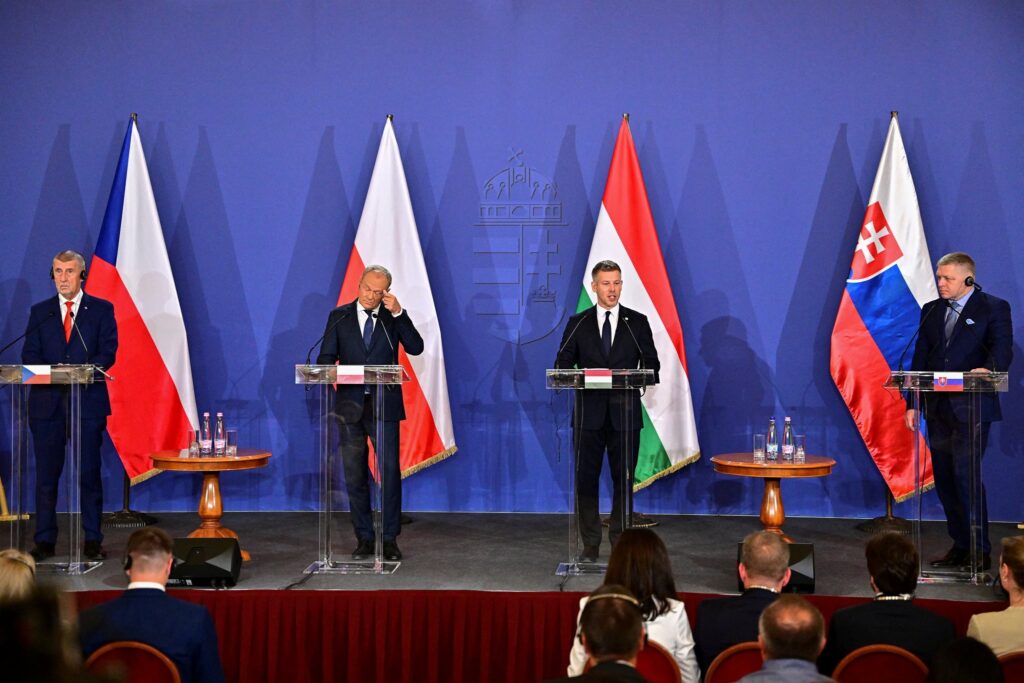
What We Learned from the Press Conference
The official meeting of the prime ministers took place at 5:00 p.m. at Grassalkovich Castle in Gödöllő, and at 7:00 p.m. we had the pleasure of attending a press conference, which Péter Magyar opened with a speech.
V4 is back!
— Magyar Péter (Ne féljetek) (@magyarpeterMP) June 23, 2026
It was an honour to host the Prime Ministers of Poland, Czechia, and Slovakia in Gödöllő at Grassalkovich Castle.
The Visegrád Group is stronger than ever! pic.twitter.com/Ai6fWvpEN1
Felemelő és egyben megtisztelő volt Erzsébet királyné egykori kedvenc kastélyában, Gödöllőn fogadni a lengyel, a cseh és a szlovák miniszterelnököt.
— Magyar Péter (Ne féljetek) (@magyarpeterMP) June 24, 2026
A haza minden előtt. ❤️🤍💚 pic.twitter.com/ziaK4Vh9wH
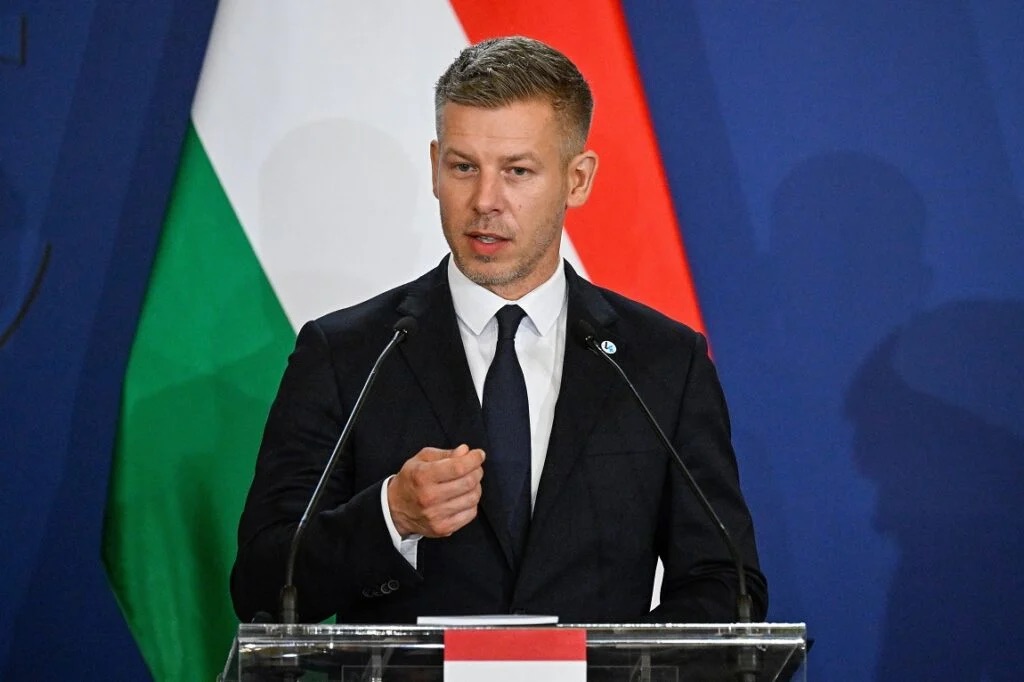
His first speech echoed the enthusiasm he had expressed on his social media profiles. In it, he repeated Donald Tusk’s words from Brussels: “V4 is back.” He also emphasized how deeply rooted the Visegrad Group is in the region’s history, pointing to its 35-year history.
For Péter Magyar, the essence of the V4 lies in the existence of a strong, tangible, and alternative voice in Europe, rooted in deep bonds and partnership-based cooperation. He also highlighted the enormous financial and social potential inherent in the 65-million-strong population of the Visegrad Group countries. He also announced the plan, previously presented to Donald Tusk, to build a high-speed rail line connecting Bratislava, Prague, Warsaw, and Budapest. However, this issue will be addressed during the Slovak presidency, as this week’s summit marked the culmination of the Hungarian presidency.
In addition to the most important goal of cooperation, Péter Magyar also emphasized the importance of the International Visegrad Fund and highlighted issues that the leaders of the four countries should address. These include: economic competitiveness, affordable energy prices, digitalization, artificial intelligence, cybersecurity, energy, regional connectivity, and support for the Western Balkans. The Hungarian prime minister also emphasized that the V4 is not only about integration at the governmental level, but also at the cultural, educational, and civic levels.
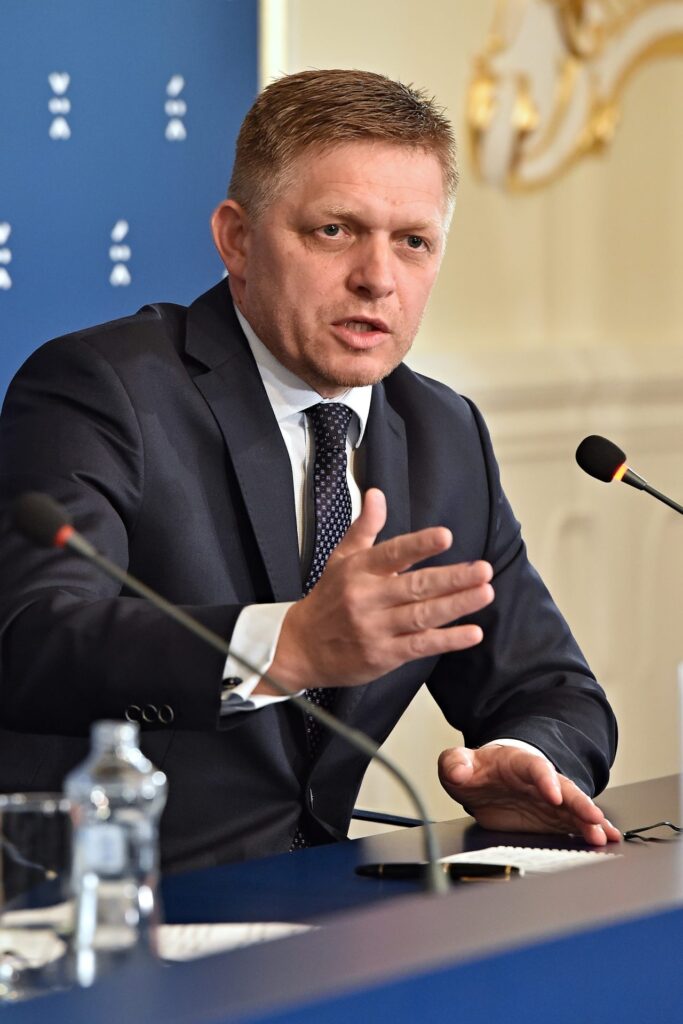
Now we’ll move on to what I consider the most important event of this conference: Robert Fico’s speech. The SMER leader began his remarks by thanking Péter Magyar for handing over the presidency, which will run from July 1 through the end of this calendar year.
For Prime Minister Fico, the V4 must once again become strong through ambitious actions, thoughtful responsiveness, and a willingness to make difficult decisions. The Visegrad Group must stop passively observing European decisions and instead begin to help shape EU policy, becoming an active player in it. In his view, success will be measured by the development and implementation of a joint resolution within the EU on illegal migration, anticipating just how crucial this issue will be for the entire region. He presented and called for the implementation of an extremely sound idea: joint meetings prior to European Council sessions.
However, a statement was also made that personally concerned me. Namely, Slovakia—citing the principles of wisdom and shared governance—will address only issues that unite, rather than divide, the V4 members. While the premise itself may sound reasonable, I see the potential here for sidestepping contentious issues in the future, such as the approach to the Russia-Ukraine war, the problem of competition in the attractiveness of national industries, and the stance toward the influx of Chinese technologies or foreign energy resources.
THE 4 PILLARS OF THE SLOVAK PRESIDENCY
Enhancing the EU’s competitiveness—shaping a favorable EU budget for 2028, implementing cohesion and agricultural policies in line with the V4’s interests, and serving as a voice of reason in European discussions, while respecting regional differences,
EU Enlargement – sharing our experiences regarding EU membership with countries engaged in accession talks (such as Ukraine, Montenegro, Serbia, and Albania), while respecting the accession criteria,
Sectoral cooperation – collaboration among V4 members in the areas of defense, defense industry development, combating illegal migration, and protecting external borders, as well as cooperation in the field of healthcare (the latter two being suggestions by Péter Magyar, which Slovakia has agreed to),
People-to-people contacts – supporting the International Visegrad Fund, retaining the name “Visegrad Group” while involving the countries participating in the Visegrad+ program, and proposing a summit with Ireland.
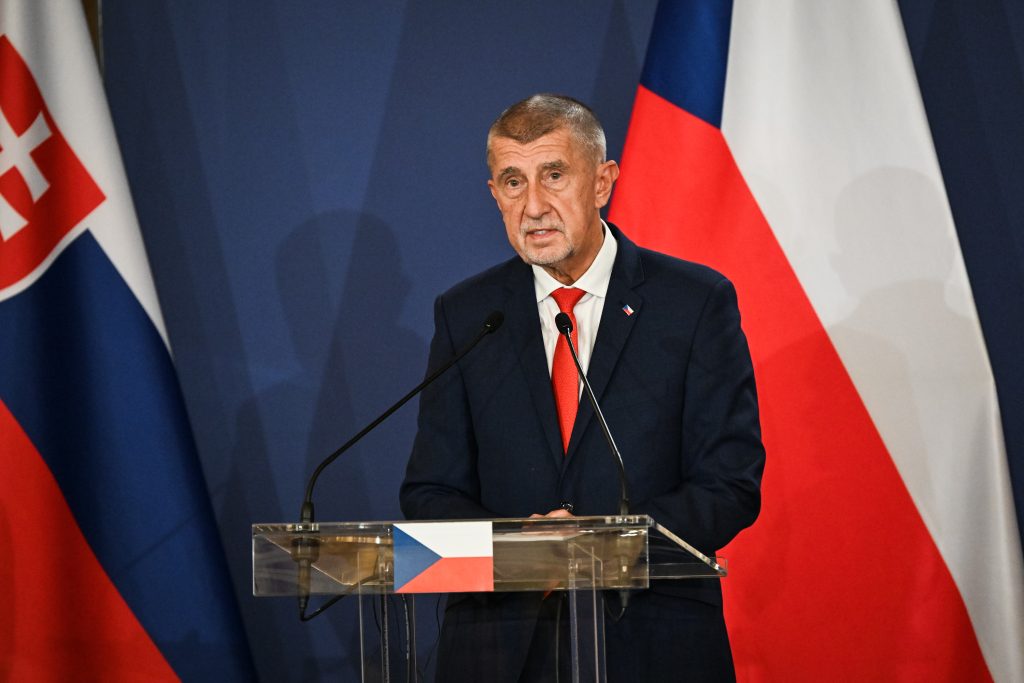
Andrej Babiš and Donald Tusk
Although the Prime Minister of the Czech Republic was by far the least effusive participant at the meeting in Gödöllő, his visit was not limited to mere image-building. The issues Babiš mentioned lead me to conclude that, following Péter Magyar’s post, he focused his efforts on discussions away from the cameras.
From his remarks, it appears that he was the one who initiated the idea of inviting the chancellors of Austria and Germany to future summits. This stems mainly from their political significance within the EU and the potential for negotiations on the ETS¹ and emissions quotas, which are hitting the Czech economy hard. Babiš himself described the fact that Czech industry loses 50 billion euros annually as “nonsense.” On other issues, the politician repeated the arguments of his predecessors, with the exception of his attendance at the NATO summit. This later became the number one topic in the Czech Republic, which I will be sure to mention in the near future.
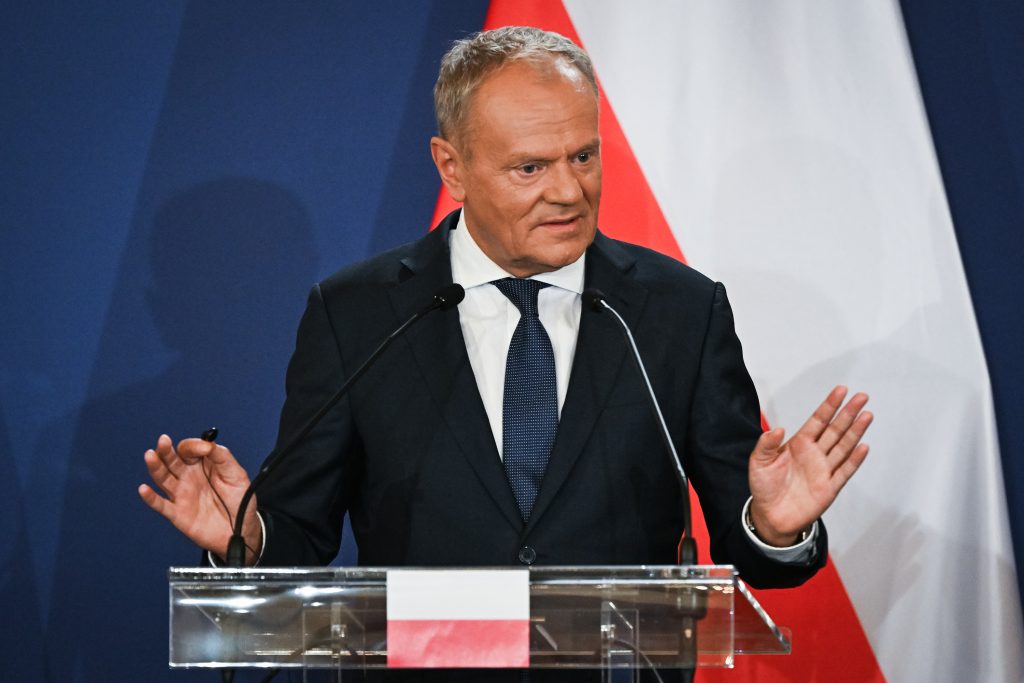
In his speech, Donald Tusk thanked Péter Magyar for winning the election, singling him out as the key figure who made this hopeful summit possible. Like Robert Fico, he noted that the V4 countries cannot passively watch decisions made at the EU level and emphasized their crucial role in defending the interests of Central and Eastern Europe. What I personally liked was his “veteran” rhetoric—that of a man who has been associated with the Visegrad Group for 20 years and has valuable experience gained through his participation in, among other things, the Weimar Triangle and the Three Seas Initiative. He even jokingly finished his list to keep everyone on their toes. In addition, the Polish prime minister struck the same notes as Magyar and Fico, emphasizing the need for further cooperation and highlighting the potential and uniqueness of the Visegrad Group.
FINAL STAGE OF THE CONFERENCE
Questions from the audience:
After a series of speeches, it was time for questions from the audience, which fell into four main themes. Here, I will briefly summarize each prime minister’s position:
– Why has cooperation weakened?
Robert Fico and Andrej Babiš criticized their respective national opposition parties, while Péter Magyar and Donald Tusk blamed Orbán for the situation. The leader of Tisza raised the issue of pro-Russian sentiments and the matter involving Ziobro and Rymanowski. For his part, the leader of the Civic Coalition referred to the shift in the Fidesz leader’s views, noting that he had crossed the line, which was unacceptable. He acknowledged that the problem was not differences of opinion with Fico or Babiš, which might have indicated their negative attitude toward Orbán.
– The issue of V4+ and the possibility of permanent expansion
In this case, everyone agreed that there would be no permanent expansions, and that only invitations to Visegrad Group summits are on the table. According to Fica, the key partners in this cooperation are countries that will bring added value to the common interests of V4 members. These are countries that understand the specifics of agricultural and cohesion policies and are aware of the strategic importance of the Central and Eastern European region. This group includes the chancellors of Austria and Germany, as well as the prime minister of Ireland, which will assume the presidency of the Council of the EU on July 2.
– Official meeting between the prime ministers of Slovakia and Hungary
Both prime ministers were very reluctant to give an answer, and their facial expressions revealed a friendly agreement to remain silent.
– The issue of Zelenskyy’s absence from the Conference on the Reconstruction of Ukraine
All the prime ministers, with the exception of Donald Tusk, responded to this question in a united, evasive, and diplomatic manner. The Polish prime minister, however, deemed the behavior of both presidents “unnecessary” and viewed Yulia Svyrydenko’s presence at the head of the Ukrainian delegation as a step toward de-escalating the conflict.
Before the broadcast ended, on the occasion of the 35th anniversary of the Visegrad Group, Péter Magyar presented commemorative medals to each of the other prime ministers.
SUMMARY
After a very long period of tensions and conflicts of interest, the Visegrad Group has finally found common ground—or so it seems to me. For obvious reasons, I was most interested in Robert Fico’s stance. After all, it is not Hungary but Slovakia that has taken on the burden of leading the V4. I was afraid that this event would turn out to be an hour-long media “stunt” and a deliberate prolongation of empty rhetoric (reminiscent of the recent, much-criticized speech by Warsaw Vice Mayor Renata Kaznowska). Fortunately, the meeting produced a well-developed plan with a solid foundation, based on four pillars. The role and tasks of the V4 were described in a way that seems satisfactory to all parties. Prime Minister Fico’s motivation appears sincere and firmly rooted in the context of recent geopolitical events.
Looking at the photos published on X, I sense genuine bonds of brotherhood connecting the prime ministers (this is perhaps naive in the political world, but it offers hope for a better future for the entire Visegrad Group). During the conference, one could see the good rapport between Donald Tusk and Péter Magyar.
I would also like to commend Prime Minister Donald Tusk for his conduct during this summit. I was particularly struck by his excellent use of gestures and facial expressions, which he skillfully combined with what was by far the best intonation. In addition, he was able to deftly use situational humor. However, the most important point, in my opinion, was the portrayal of Poland within the V4 as the “big brother” who is always ready to help his allies. This comparison is particularly apt, given the history of Poland’s efforts to ensure the Višegrad Group’s continuity in recent years. Not only is it accurate, but it is also beneficial from our perspective, because despite not holding the presidency, it underscores Poland’s role as a regional leader. In my view, one could even say that we are serving as the “behind-the-scenes V4 presidency.”
