Introduction and a brief overview of the current situation
Until recently, many people viewed tanks as relics of a bygone era, unsuited to the modern battlefield, which is filled with new systems such as drones and top-attack anti-tank missiles. Some countries, such as the Netherlands in 2011, completely abandoned their armored vehicle fleets. However, following the outbreak of the war in Ukraine and its subsequent developments, the views of former skeptics have changed dramatically, and tanks are once again seen as an integral part of the battlefield.
As a result, many European countries have launched drastic modernization plans for their armored forces to better prepare them for combat in today’s reality. Take Poland, for example, which is purchasing hundreds of K2 Black Panther and M1 Abrams tanks; the British, who are acquiring third-generation Challenger tanks; or the Netherlands, mentioned earlier, which is currently working to rebuild its armored units by acquiring German Leopard 2A8 tanks.
As the modernization of European armored fleets continues, questions are increasingly being raised about the potential development of successors to the current generation of tanks. While tanks currently in production are capable of coping reasonably well with modern threats, given the pace of military technology development, these vehicles may become obsolete in the near future, especially since they are not new designs. The French Leclerc main battle tank, for example, has been in production since the early 1990s, while modern Leopard 2 tanks, like the Abrams tanks, are based on designs from the late 1970s. As a result, European countries have for some time been working on next-generation tanks designed to replace their increasingly aging vehicles.
French-German Cooperation: The MGCS
The first such program—and arguably the most high-profile to date—was the Franco-German Main Ground Combat System (MGCS). Launched in 2017, it aims to develop a next-generation main battle tank by 2035 to replace the French Leclerc and Leopard 2 tanks. Its development is being handled by KNDS Systems, a joint venture created specifically for this purpose, comprising Nexter Systems SA (formerly GIAT Industries), the French manufacturer of the Leclerc, and Krauss-Maffei Wegmann GmbH, the manufacturer of the Leopard, which were later renamed KNDS France and KNDS Deutschland, respectively. Over time, the project gained the support of other companies, specifically Rheinmetall AG in 2019 and, more recently, the French company Thales Group.
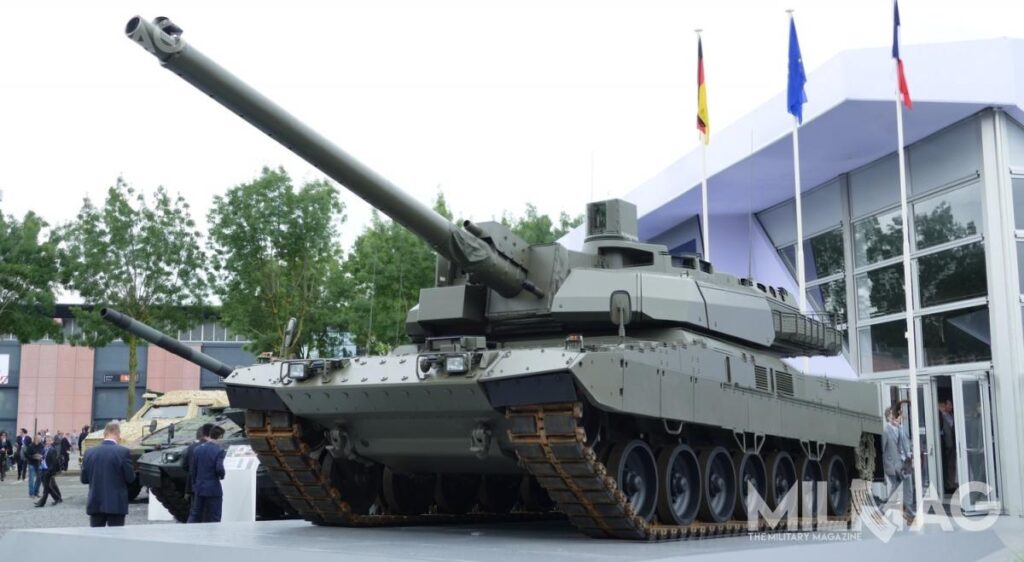
The work of these companies led to the unveiling of the Enhanced Main Battle Tank (EMBT) concept at the 2018 Eurosatory trade show in Paris, intended to demonstrate what the MGCS tank might look like in the future. Initially, the vehicle was presented as merely a hybrid tank, consisting of a Leclerc turret and a Leopard 2 chassis, but over time, the design underwent significant evolution.
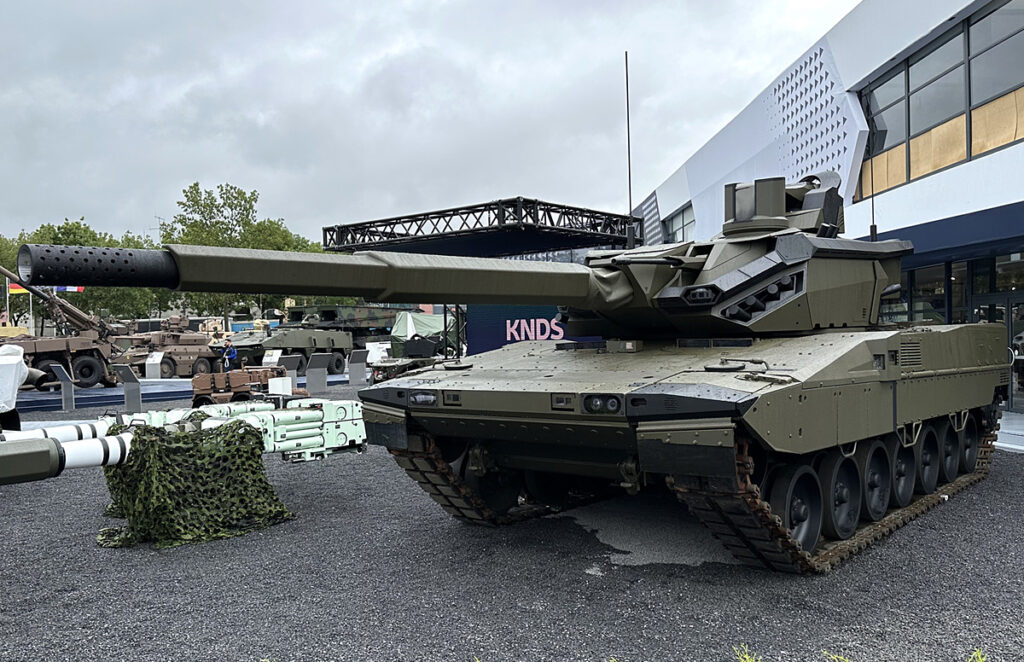
The latest version of the EMBT tank, also known as the EMBT ADT 140, continues to be based on the familiar Leopard 2 tank chassis, but also features a completely new unmanned ADT 140 turret (short for ASCALON Demonstrator Turret 140), whose main armament is the French ASCALON 140 cannon, with a caliber of 140 mm and a barrel length of 48 calibers. Alternatively, the cannon can be replaced with the less conventional 120-mm ASCALON 120 cannon. Additionally, the tank is equipped with a remotely controlled commander’s weapon station featuring a 30-millimeter cannon, designed to shoot down approaching drones, and is ultimately intended to be equipped with a hard-kill active protection system. The powerplant consists of the EuroPower Pack from the Leopard 2A7 tank, which includes an MTU MT883 engine and a Renk HSWL 295TM transmission, delivering 1,500 horsepower, although the MGCS is ultimately intended to feature a hybrid powertrain.
Europanzer, the predecessor of the MGCS
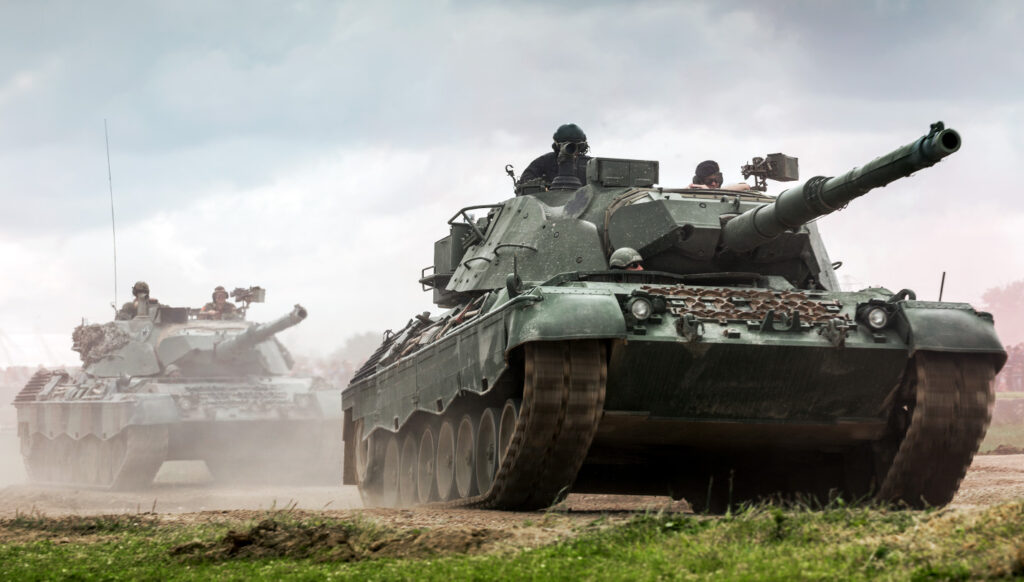
It is worth noting here that this is not the first joint project between France and Germany to develop a modern tank. The first was the Europanzer project, launched in 1955. Like the MGCS, its goal was to develop a joint tank for the French and German armies, and eventually also for the Italian army, which joined the program later. According to the specifications, the new tank was to be armed with a 105-mm cannon, be agile, and feature light armor—a decision based on the prevailing belief at the time that the battlefields of the future would be dominated by guided missiles with such high armor-penetration capabilities that a tank would need incredibly thick armor to survive their impact, which would result in enormous weight and severely limited maneuverability. This line of reasoning may seem slightly absurd from today’s perspective, but at the time it was a reasonably logical choice. Four teams set out to build prototypes of the new tank: three from Germany, led by Porsche, Rheinmetall, and Bogward—though the latter was dropped from the program relatively quickly—while the French prototype was designed by AMX (an acronym for Ateliers de construction d’Issy-les-Moulineaux, meaning “Manufacturing Workshops in Issy-les-Moulineaux”).
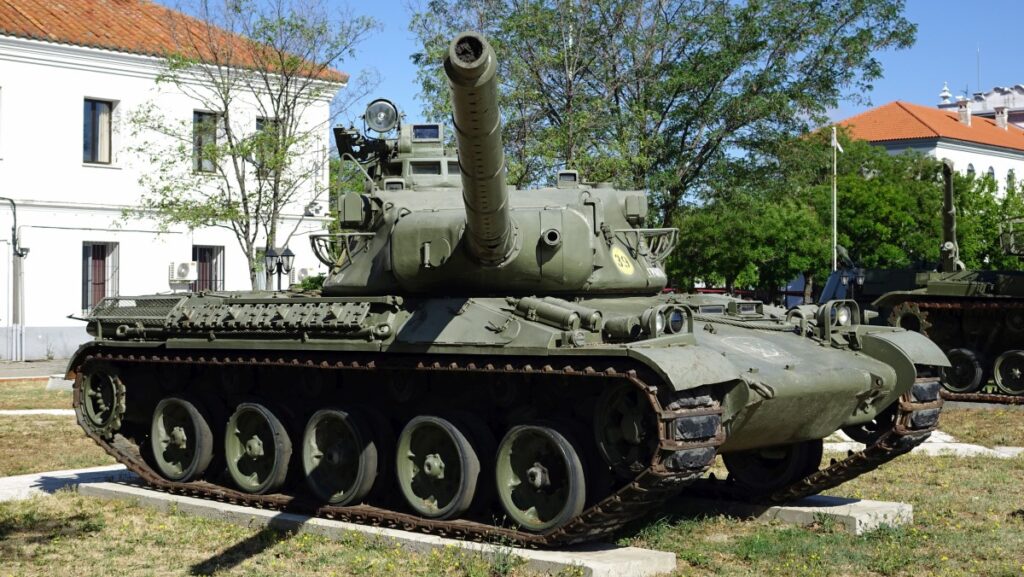
During the prototype testing phase, the program encountered serious obstacles regarding its design specifications—more specifically, the choice of the tank’s main armament. The Germans wanted the tank to be armed with the British 105 mm L7 gun, while the French pushed for their own, slightly more complex gun of the same caliber, the CN-105-F1. It was precisely because of this disagreement over the main armament that the Europanzer project ultimately failed, and France and Germany went their separate ways, developing their own tanks based on the general principles of the failed program—the AMX-30 and the Leopard 1, respectively.
I mention this because the current MGCS program seems to have similar—and even more serious—problems.
MGCS Issues
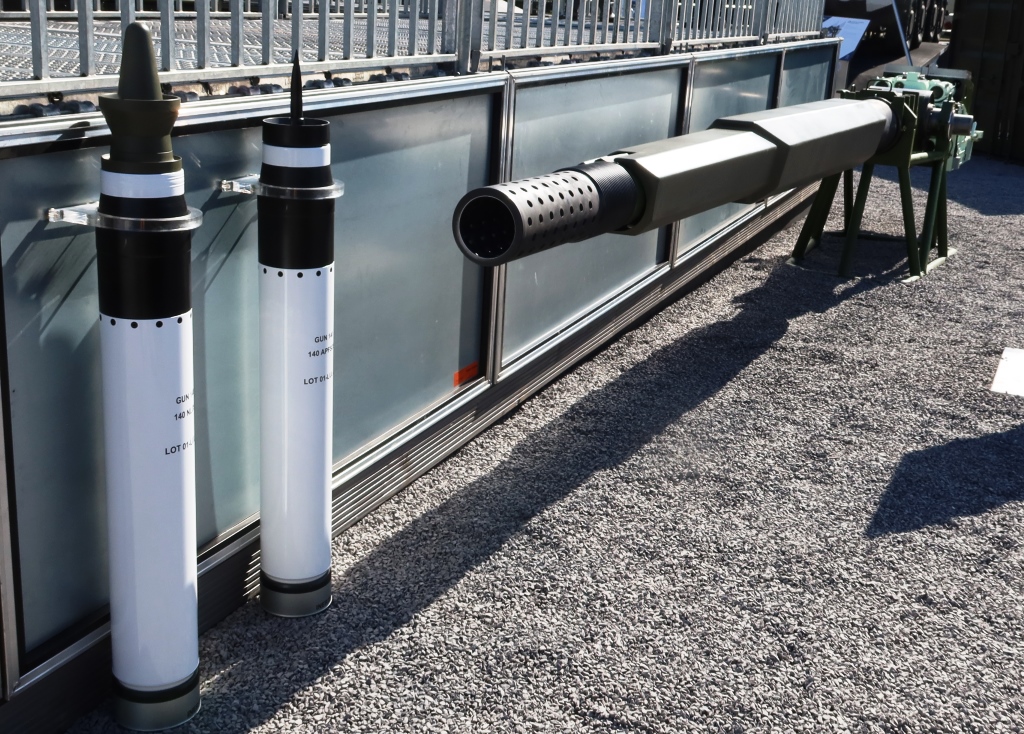
Just as with the Europanzer, there is still no definitive agreement on the armament of the new tank. While newer EMBT prototypes are equipped with the ASCALON 120/140 cannon, Germany is pushing for the adoption of its own Rh130/L51 cannon, manufactured by Rheinmetall. Although this is a smaller-caliber gun—130 mm compared to 140 mm—it has greater firepower than its French counterpart. The French gun, however, is more modular and better suited to lighter designs, which brings us to the second point of contention regarding the program’s specifications: the tank’s size. The Germans favor a more traditional approach, proposing that the vehicle weigh approximately 55–60 metric tons—similar to today’s designs—while the French side believes the new tank should have a lower weight, making it more maneuverable and mobile. Although an agreement was ultimately reached on this point—and Germany accepted the French proposal regarding the tank’s weight—this is not the end of the program’s problems.
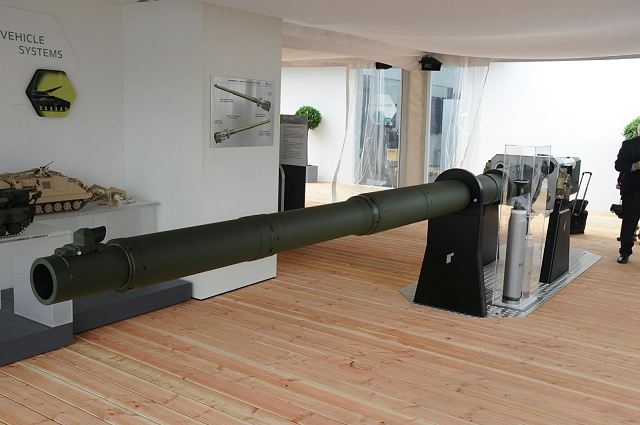
Another point of contention is the question of who should take the lead in the project. The French fear being dominated by German industry, especially given Germany’s far greater experience in tank manufacturing. These concerns intensified when Rheinmetall joined the program in 2019, resulting in two-thirds of the companies participating in the program being from Germany. Ultimately, an agreement was reached that divides the project into three pillars, each carried out by one of the three companies involved in the project, with KNDS France—responsible for one of them—accounting for 50% of MGCS component production. The situation improved even further when another French company, the Thales Group, joined the project, meaning that from now on, each company holds an equal 25% stake, while maintaining a 50/50 division of labor between Germany and France.
Despite the improvement in relations, all these disputes have caused the MGCS program to fall far behind schedule. French Defense Minister Catherine Vautrin admitted during a report to the National Assembly that the project is delayed by as much as a decade, which means that the first deliveries would not take place until 2045. As a result, both France and Germany have begun work on their own new tanks, intended to serve—to put it colloquially—as “stopgaps” until the MGCS program is completed.
“Stopgap” Tanks
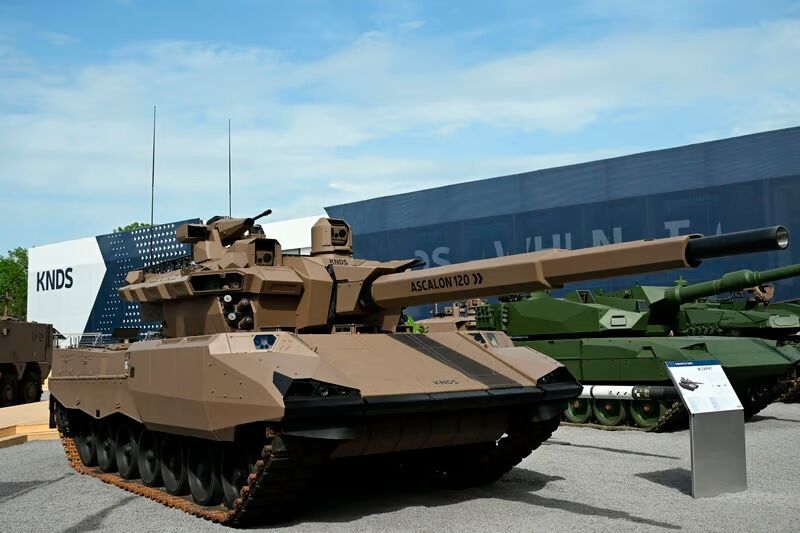
The French initially planned for the role of “gap filler” to be filled by a major modernization of the Leclerc—dubbed the Leclerc Evolution—unveiled at the Eurosatory 2024 trade show, equipped with a modernized two-man turret armed with a 120-mm ASCALON 120 cannon, a ZSMU with a 30-mm automatic cannon, and the Trophy active hard-kill protection system. Ultimately, however, it was decided to develop a new vehicle. The bridge-laying tank project for France was named CAPINT. The name of this program is an acronym for CAPacité INTermédiaire, which loosely translates to “intermediate capability” or “transitional capability.” Developed by KNDS France, in cooperation with KNDS Deutschland, it is to be based on the chassis of the latest version of the Leopard 2A8 tank and utilize the ADT 140 turret, meaning it will differ only slightly from the EMBT ADT 140 demonstrator.
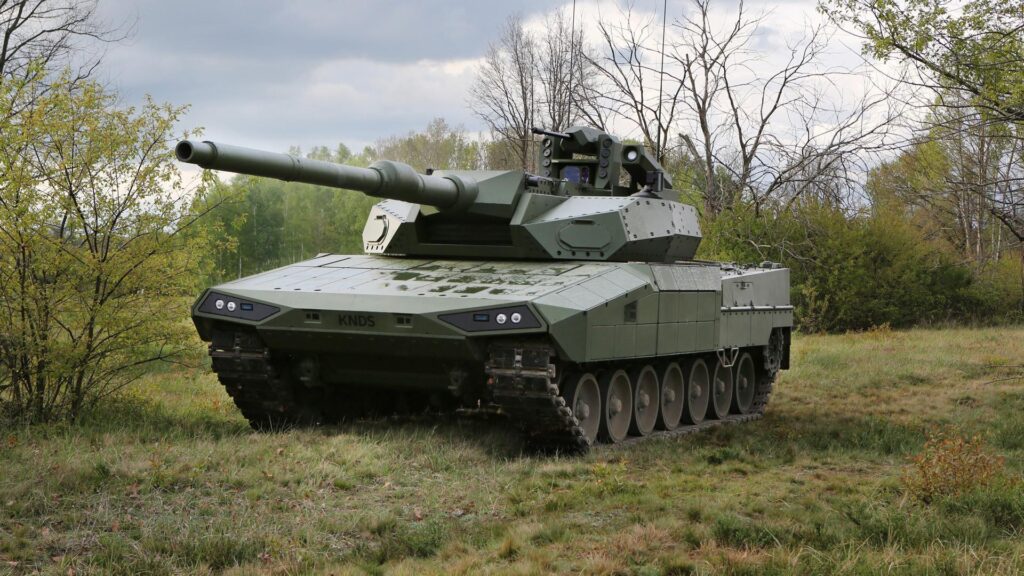
At the same time, Germany began work on its own “stopgap” tank, the Leopard 3, sometimes referred to as the Leopard 2AX. It is being developed by KNDS Deutschland and Rheinmetall AG through PSM Projekt System & Management GmbH—a joint venture originally established to design the Puma Infantry Fighting Vehicle—in collaboration with Hensoldt. The tank is ultimately intended to be equipped with an Rh130/L52 cannon, feature the MUSS 2.0 soft-kill active protection system, and likely also a hard-kill system. It is likely to be derived from a technology demonstrator created by KNDS Deutschland, the Leopard 2A-RC 3.0. A tank based on the Leopard 2 chassis, equipped with an unmanned turret supplemented by Rheinmetall technology.
Alternatywy dla MGCS
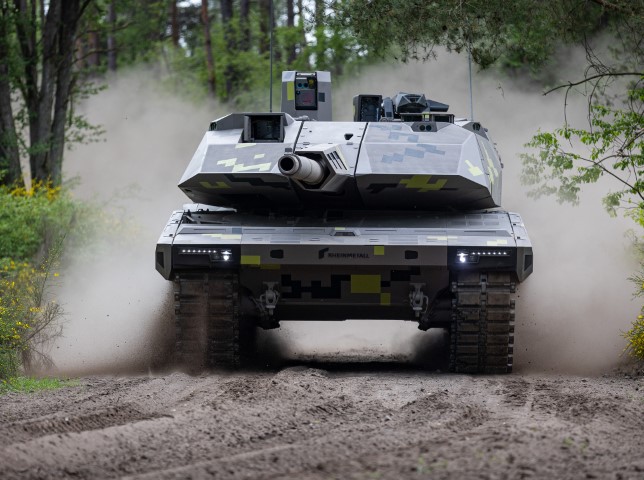
And speaking of Rheinmetall, it’s worth noting that at the same time, the Düsseldorf-based company decided to design its own alternative to the MGCS. The project was named the KF51 Panther and was unveiled for the first time at the Eurosatory 2022 trade show. It features a manned turret equipped with an automatic loader and armed with a 130-mm cannon. It is also to be equipped with the Strike-Shield hard-kill protection system, a ZSMU integrated with a 7.62 mm Natter machine gun, and, optionally, the capability to fire Hero-120 loitering munitions. The entire system is mounted on a modernized version of the Leopard 2A4 chassis.
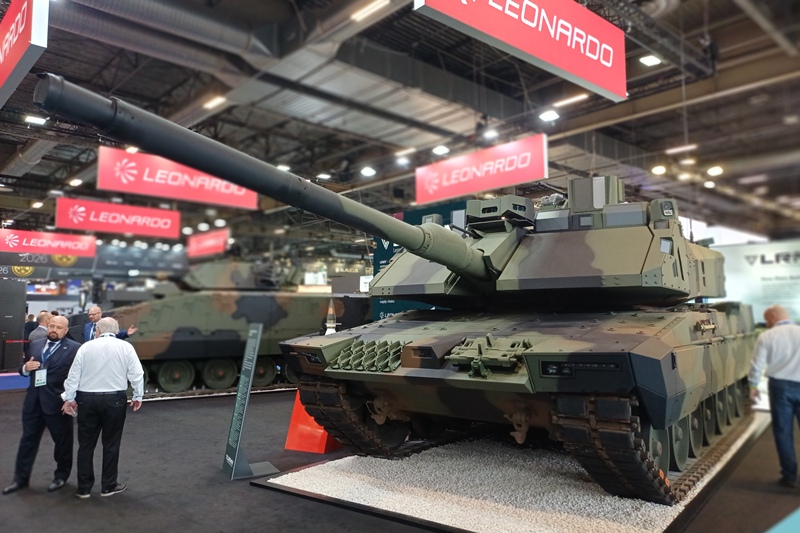
Among others, Italy has expressed interest in the Panther tank; it formed the LRMV consortium—comprising Leonardo and Rheinmetall—to launch production in Italy of an “Italianized” version of the German tank. The project has been tentatively designated the New Main Battle Tank (NMBT). Compared to the version proposed by Rheinmetall, it is expected to differ in terms of armament. Instead of the Rh130/L51 gun, it is ultimately to be armed with an Italian 120-mm gun with a 55-caliber barrel and equipped with a close-in weapon system (CIWS) featuring a 30-mm cannon. These tanks were originally scheduled to enter service with the Italian Army in 2027, but that deadline appears to be unrealistic.
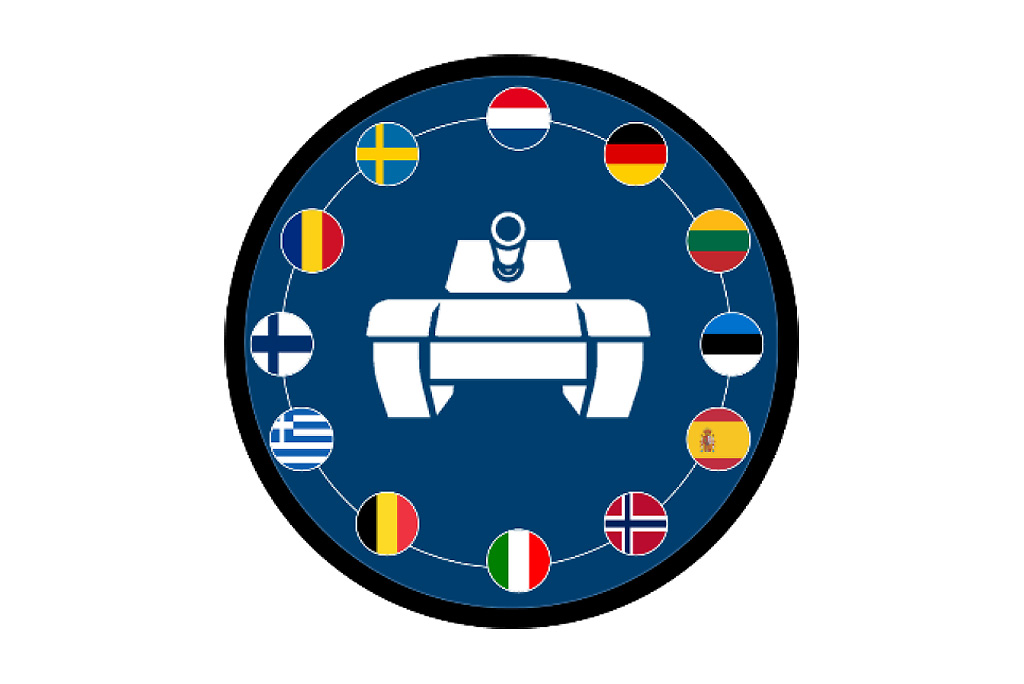
However, this is not the only next-generation tank program being pursued by Rheinmetall. Together with KNDS Deutschland, it has established a joint venture called MARTE ARGE, with the aim of developing technologies for a next-generation tank codenamed MARTE, which stands for Main ARmored Tank of Europe. It is intended to be a pan-European project involving cooperation with Norway, Sweden, Finland, Estonia, Lithuania, Italy, Spain, Belgium, the Netherlands, Romania, and Greece—but not France. Admittedly, this is currently only a feasibility study, supported by a 20-million grant from the European Union, and may be intended solely to design specific components for the MGCS. However, France’s absence from the project may raise concerns that this program is the first step toward the creation of a competing European tank of the future.
Summary and Reflections
It might, in fact, work in favor of KNDS Deutschland—formerly Krauss-Maffei Wegmann—if the Leopard 3 project were to become more than just a “stopgap.” Its predecessor, the Leopard 2, is currently in service with 20 countries, 14 of which are members of the European Union, which could mean that existing operators would be more interested in purchasing newer versions of the German main battle tank than in buying new, different designs.
On top of that, there are voices among German politicians calling for a withdrawal from the MGCS program in favor of national solutions, including the Leopard 3 or the KF51 tank, which is set to enter service with the Italian Army in the near future. There is also the MARTE program, which is currently still in the study phase, but in my opinion, it demonstrates that Germany is not sufficiently interested in the MGCS tank, which could lead to the project’s cancellation and a repeat of what happened with the Europanzer program.
Bibliography:
- Koniec wojskowych cięć. Holandia kupuje czołgi za miliardy (15 października 2024) Defence24. https://defence24.pl/przemysl/koniec-wojskowych-ciec-holandia-kupuje-czolgi-za-miliardy
- KNDS debuts Enhanced Main Battle Tank technology demonstrator (19 czerwca 2024) Breaking Defence Europe. https://breakingdefense.com/2024/06/knds-debuts-enhanced-main-battle-tank-technology-demonstrator/
- Polska a europejski czołg przyszłości. Historia nie pozostawia złudzeń? (2 listopada 2023) Defence24 https://defence24.pl/przemysl/polska-a-europejski-czolg-przyszlosci-historia-nie-pozostawia-zludzen-opinia
- Postępy programu MGCS (25 stycznia 2025) ZBiAM https://zbiam.pl/postepy-programu-mgcs-2/
- Discover EMBT future concept of Enhanced Main Battle Tank jointly developed by France and Germany (2 czerwca 2022) Army Recognition. https://www.armyrecognition.com/focus-analysis-conflicts/army/defence-security-industry-technology/discover-embt-future-concept-of-enhanced-main-battle-tank-jointly-developed-by-france-and-germany
- Main Ground Combat System: następca (polskich) Leopardów? (18 sierpnia 2017) Konflikty.pl. https://www.konflikty.pl/technika-wojskowa/na-ladzie/main-ground-combat-system-nastepca-polskich-leopardow/
- Signature of MGCS Project Company shareholder agreement. Rheinmetall. https://www.rheinmetall.com/en/media/news-watch/news/2025/01/2025-01-24-shareholder-agreement-signed-for-mgcs-project-company
- MGCS Project Company GmbH established in Cologne to advance Franco-German defence programme (17 kwietnia 2025) Defence Industry Europe. https://defence-industry.eu/mgcs-project-company-gmbh-established-in-cologne-to-advance-franco-german-defence-programme/
- Eurosatory 2018: Prezentacja EMBT (13 czerwca 2018) MILMAG. https://milmag.pl/eurosatory-2018-prezentacja-embt/
- Eurosatory 2024 – zmodyfikowany koncepcyjny EMBT z nową armatą ASCALON 140 zaprezentowany przez KNDS France (19 czerwca 2024) ZBiAM. https://zbiam.pl/eurosatory-2024-zmodyfikowany-koncepcyjny-embt-z-nowa-armata-ascalon-140-zaprezentowany-przez-knds-france/
- Eurosatory 2022: nowa odsłona EMBT (14 czerwca 2022) ZBiAM. https://zbiam.pl/eurosatory-2022-nowa-odslona-embt/
- Eurosatory 2026: Le CAPINT (29 czerwca 2026) KNDS France. https://www.youtube.com/watch?v=IMPeqhybzvU
- Eurosatory 2026: KNDS unveils a new main battle tank generation and charts the future of very long-range artillery (15 czerwca 2026) KNDS. https://knds.com/en/press-releases/knds-unveils-a-new-main-battle-tank-generation-and-charts-the-future-of-very-long-range-artillery
- MGCS: MGCS opóźniony. Francja zbuduje własny czołg pomostowy (czerwiec 2026) MILMAG. https://milmag.pl/mgcs-opozniony-francja-zbuduje-wlasny-czolg-pomostowy/
- Eurosatory 2026: Premiera demonstratora technologii CAPINT od KNDS France (czerwiec 2026) MILMAG. https://milmag.pl/eurosatory-2026-premiera-demonstratora-technologii-capint-od-knds/
- Przemysł pancerny: Gwóźdź do trumny europejskiego czołgu przyszłości? [OPINIA] (16 grudnia 2025) Defence24. https://defence24.pl/przemysl/gwozdz-do-trumny-europejskiego-czolgu-przyszlosci-opinia
- Przemysł zbrojeniowy: Leopard 3 z zielonym światłem. Niemcy stawiają na własne rozwiązania, zanim MGCS ujrzy światło dzienne (29 grudnia 2025) Portal Obronny. https://portalobronny.se.pl/przemysl-zbrojeniowy/leopard-3-z-zielonym-swiatlem-niemcy-stawiaja-na-wlasne-rozwiazania-zanim-mgcs-ujrzy-swiatlo-dzienne-aa-HGRm-d4tF-mx26.html
- Wiadomości: Nadchodzi Leopard 3 (8 lutego 2025) Konflikty.pl. https://www.konflikty.pl/aktualnosci/wiadomosci/nadchodzi-leopard-3/
- Eurosatory 2022: Pantera z ostrym pazurem. Nowa generacja Leoparda (13 czerwca 2022) Defence24. https://defence24.pl/przemysl/eurosatory-2022-pantera-z-ostrym-pazurem-nowa-generacja-leoparda
- Przemysł pancerny: “Europejski czołg” po raz kolejny. Tym razem bez Francji (1 lipca 2025) Defence24. https://defence24.pl/przemysl/europejski-czolg-po-raz-kolejny-tym-razem-bez-francji
- EMBT1 (fot. Łukasz Prus) wzięte z https://zbiam.pl/eurosatory-2022-nowa-odslona-embt/
- EMBT2 (fot. Remigiusz Wilk) wzięte z https://milmag.pl/eurosatory-2018-prezentacja-embt/
- EMBT3 (fot. Michal Pivonka) wzięte z https://www.czdefence.com/article/the-future-of-tanks-in-europe-and-in-the-czech-army
- Leo1 (fot. The Tank Museum) wzięte z https://tankmuseum.org/tank-nuts/tank-collection/leopard-1-main-battle-tank/
- AMX30 (fot. Wikipedia) wzięte z https://www.konflikty.pl/aktualnosci/wiadomosci/hiszpania-wbrew-embargu-sprzedala-wenezueli-czesci-do-amx-30/
- ASCALON (fot. European Defence Review) wzięte z https://www.edrmagazine.eu/ascalon-nexters-solution-for-the-mgcs-main-gun
- Rh130/L52 (fot.Militechmag) https://www.edrmagazine.eu/ascalon-nexters-solution-for-the-mgcs-main-gun
- CAPINT (fot. dpa / W. v. Dewitz) wzięte z https://www.aerospace-and-defence.com/knds-capint-main-battle-tank-mgcs-interim-solution-a-d5eb7e293bf029abeb355713bda60194/
- Leo2RC (fot. KNDS) wzięte z https://milmag.pl/leopard-2a-rc-3-0-od-knds-ujawniony/
- KF51 (fot. Rheinmetall) wzięte z https://zbiam.pl/kf51-panther-blizej-produkcji-seryjnej/
- NMBT (fot. Dawid Kozdra) wzięte z https://www.altair.com.pl/eurosatory-2026-niemiecko-wloski-nmbt
- MARTE (fot. Europeam defence review) wzięte z https://www.edrmagazine.eu/marte-main-armoured-tank-of-europe