
Let us go back in time. It is 8 January 2023. Two months earlier, in an exceptionally close race, former president Lula da Silva wins the election, taking office from Jair Bolsonaro. Bolsonaro’s supporters organise a huge protest in the capital, Brasília. The demonstration quickly turns violent: protesters clash with the security forces and ultimately seize and vandalise the National Congress building, the seat of the Federal Supreme Court, and the presidential Planalto Palace. From the crowd come calls for the army to intervene by force on behalf of Bolsonaro — in their view the legitimate president — who has been in Florida for a week.
That episode, sometimes called in the media “Brazil’s January 6,” became one of the grounds for Bolsonaro’s arrest and for charges of attempting a coup. On 11 September 2025, in an unprecedented ruling, he was found guilty and sentenced to 27 years in prison. Beyond conspiring to overthrow Brazil’s democratic order and playing a key role in the events of 8 January, the charges also included planning an attempt on the lives of President da Silva, Vice President Geraldo Alckmin, and one of the Supreme Court justices, Alexandre de Moraes. That same de Moraes was the first to read out the sentence convicting Bolsonaro.
The decision, of course, divided an already deeply polarised Brazilian public. The former president’s camp, the Liberal Party, did not abandon Bolsonaro and still regards him as its leader, even though, for obvious reasons, he cannot run. At first the favourite to take his place was the governor of São Paulo, Tarcísio de Freitas. In December 2025, however, Bolsonaro’s eldest son, Flávio, announced his own presidential run with his father’s blessing. So, four years on, Lula and a Bolsonaro are once again competing for the presidency — only the roles have reversed, and the former president has had to find a stand-in, in effect running a campaign from prison through his son.
Lula da Silva’s third term
Luiz Inácio Lula da Silva, often known simply as “Lula,” is a true veteran of Brazilian politics. A trade unionist and an opponent of the military dictatorship, he first ran for president as far back as 1989. He failed to win then, and again in 1994 and 1998. Only on his fourth attempt, in 2002, was he elected, taking more than 60 percent in the runoff — a result he repeated in 2006. During his first two terms Brazil enjoyed an economic boom, its international standing rose, and sharply higher social spending lifted tens of millions of Brazilians out of poverty. The stain on those achievements remains the many corruption scandals that repeatedly entangled the highest figures in the presidential administration, including Lula himself. As part of the famous anti-corruption Operation Car Wash (Lava Jato), Lula’s home was searched, and the retired president was questioned and charged. Despite an attempt by his successor, Dilma Rousseff — later removed from office — to give him a post that carried immunity, in July 2017 Lula was sentenced to nine and a half years in prison for taking a bribe and other corruption charges. The following year, not without difficulty, he turned himself in to the police. In 2019 he was freed, and two years later the Federal Supreme Court dismissed all charges against the former president, finding that the lead judge in the case, Sergio Moro, had not acted independently or impartially. After leaving prison Lula returned to politics and, without much trouble, secured the nomination of his party, the left-wing Workers’ Party, narrowly defeating incumbent Jair Bolsonaro in the 2022 presidential election.
After Bolsonaro’s rather chaotic presidency, Lula da Silva’s third term has focused on restoring Brazil’s “predictability,” both at home and abroad. To a large extent, the administration’s main efforts have concentrated on the latter. Brasília is building its international position as one of the leaders of the Global South, a key force in Latin America, and a stable partner seeking peace and compromise. Despite notable successes — including a significant role in easing the dispute between Venezuela and Guyana — a shifting international system and its growing unpredictability have made the policy Brazil represents harder to pursue. On top of that came Donald Trump’s return to the White House. During the trial of former president Bolsonaro, Washington called the proceedings a “witch hunt” and used them as a pretext to impose tariffs on Brazil of up to 50 percent.
At home, a serious obstacle to governing is the party balance in Congress, where Lula’s opponents hold a majority. Even so, during the administration’s third term it has managed to pass major tax reforms, illegal logging in the Amazon has been largely curbed, economic growth remains relatively strong, and inflation is low. Those positive macroeconomic figures, however, are not reflected in the mood of Brazilians, who are increasingly burdened by rising living costs. As a result, support for President da Silva is, by his standards, at a record low — and the scandals trailing his administration do not help.
The 2026 campaign: candidates, platforms, and scandals
The main axis of the debate has become the corruption scandals that came to light around the same time. The first concerns the embezzlement of money from the National Social Security Institute, with funds owed to pensioners and disability beneficiaries diverted to trade unions favoured by those in power. Besides politicians linked to President Lula’s Workers’ Party, the leading name caught up in the scandal is his eldest son, Fábio Luís Lula da Silva, known as “Lulinha.”
The second affair is much broader. The Banco Master scandal, also called the Vorcaro affair, involves figures from both main political camps. Among them are Flávio Bolsonaro himself; Ciro Nogueira, his father’s former chief of staff; the aforementioned Alexandre de Moraes — the lead judge who ruled against Jair Bolsonaro — as well as Jaques Wagner, one of the government camp’s leaders in the Senate, and many others. Those four appear in messages with banker Daniel Vorcaro, who is responsible for falsifying invoices and financial fraud. Alexandre de Moraes’s involvement has triggered an ongoing institutional crisis at the Federal Supreme Court. The situation is still developing, and at the time of writing the Court is paralysed over whether to open proceedings against Moraes.
Thirteen candidates are seeking the presidency, but only four have met the requirements for their ads to be broadcast on television and radio, and six have qualified for the debates. That does not change the fact that only Lula da Silva and Flávio Bolsonaro have a real chance of winning — though the profiles of the other four candidates who regularly appear in the polls are worth setting out.
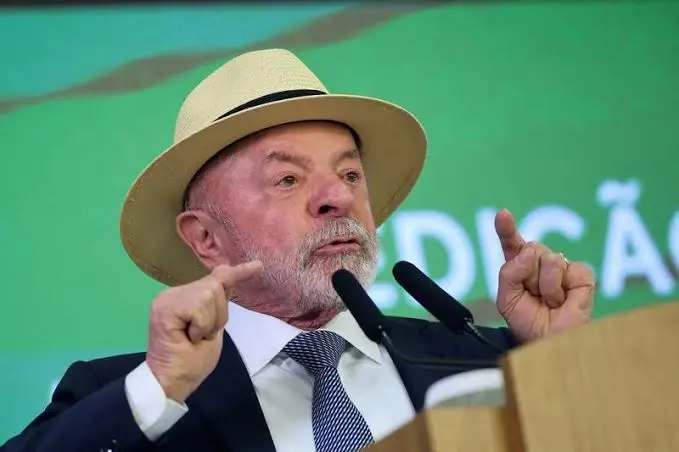
Incumbent president Luiz Inácio Lula da Silva, now nearly 81, is fighting for a fourth term — a feat no one has achieved in Brazil’s democratic history. The candidate of the left-wing Workers’ Party has been a fixture of Brazilian politics since the 1980s. The main theme of Lula’s campaign this year is the defence of national sovereignty against outside interference, above all from the United States under Donald Trump. The president’s administration has turned Washington’s high tariffs to its advantage with some success, describing them as a costly interference in the election aimed at boosting Flávio Bolsonaro. With rising living costs in mind, Lula is proposing more social assistance through working-time reforms and federal programmes. Despite the country’s sound economic situation under his government, that has not translated into satisfaction among ordinary citizens, and his approval ratings are weakening. The eruption of major corruption scandals — nothing new for Lula’s administration, and the reason he was convicted in the past — is not helping either.
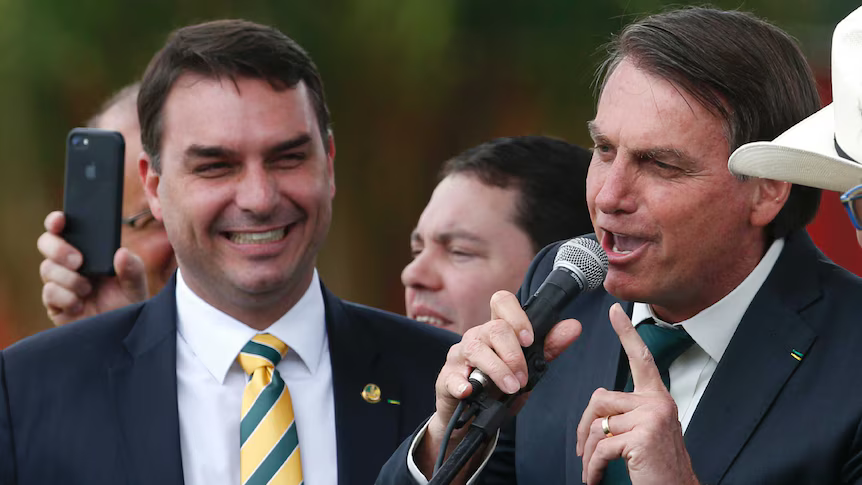
Senator Flávio Bolsonaro, 45, can fairly be described as his father’s son — and that description would, in practice, be enough to sum up his campaign. The candidate of the Liberal Party — which, despite its name, is classed as far-right — is a stand-in for former president Jair Bolsonaro. Senator Flávio focuses mainly on promises of an amnesty for his father and for those involved in the events of 8 January, the removal of Justice Alexandre de Moraes from office, and the fight against crime, which remains a central concern for Brazilian voters. Unlike President Lula, he favours cutting government spending and is an ally of Donald Trump. His main problems are his direct role in the Vorcaro corruption scandal, the obvious link between his candidacy and the controversial former president, and the fact that many people blame him for the United States’ aggressive tariff policy toward Brazil.
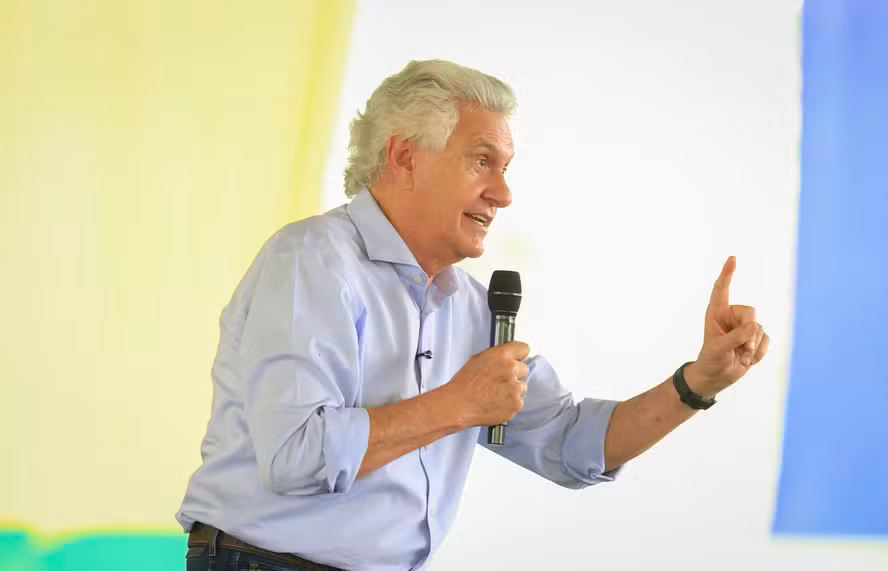
Ronaldo Caiado is the former governor of the state of Goiás. The 76-year-old is running for the centre-right Social Democratic Party and is tied to Brazil’s powerful agribusiness sector. He draws his electorate from more centrist right-wing voters who are tired of, or unhappy with, President Bolsonaro’s rule and the controversies around him. His proposals include wide-ranging budget cuts, developing domestic industry for processing raw materials, and fighting crime through close cooperation with other countries on the continent.
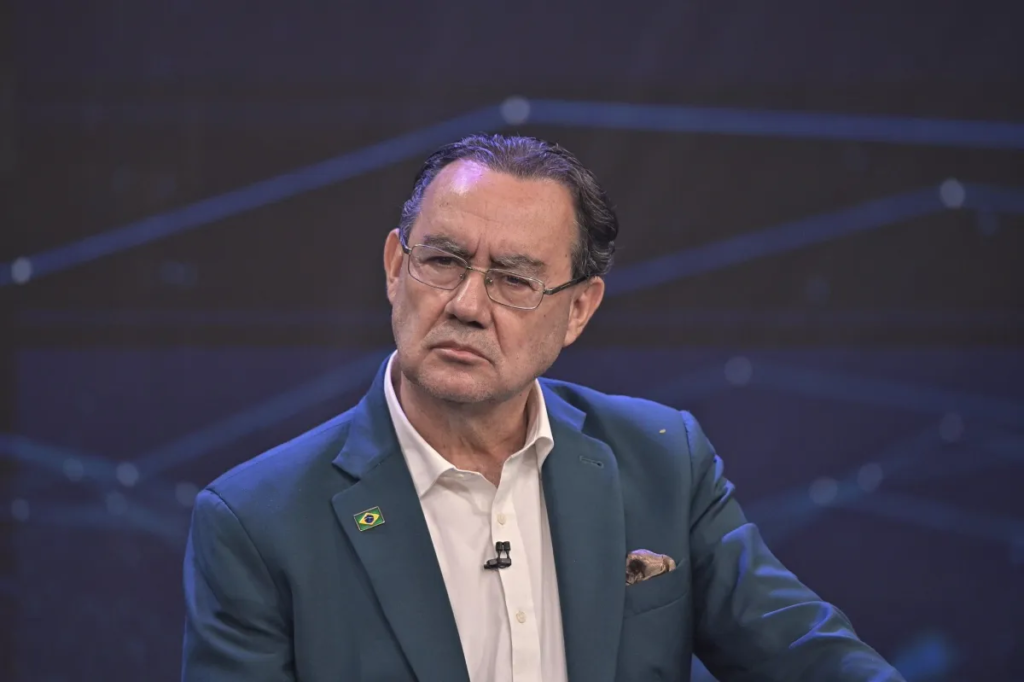
Augusto Cury is new to the Brazilian political scene: a 67-year-old physician, psychiatrist, and author of many books on mental health. The candidate of the smaller centrist party Avante presents himself as someone from outside politics, appealing to voters weary of constant conflict and chaos. He became widely known thanks to support from a large number of social-media creators. His platform includes a thorough constitutional reform toward a semi-presidential system, greater use of artificial intelligence by the state, and a push for a “humanitarian” foreign policy.
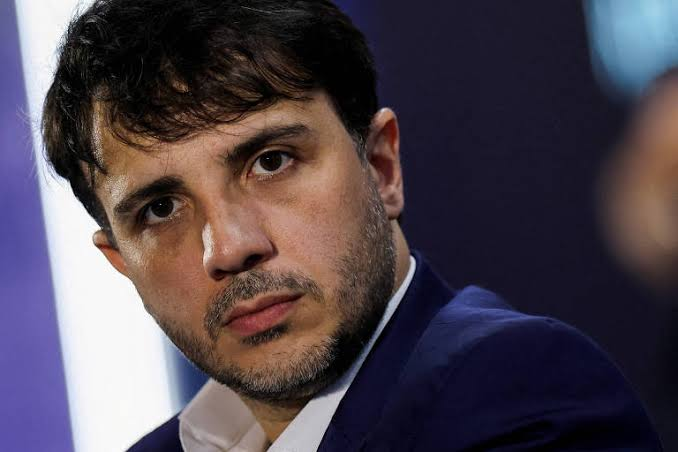
Renan Santos is one of the leading figures of the Brazilian alt-right. The 42-year-old anti-establishment activist has never before sought office, though he has been involved in politics for years. He was a founder of the Free Brazil Movement (MBL), which called for mass protests against former president Dilma Rousseff, later removed from office. The candidate of the party he founded, Missão, campaigns mainly through social media and draws significant support among young men. He advocates, among other things, a style of politics in the mould of Argentina’s Javier Milei and El Salvador’s Nayib Bukele, as well as the creation of a national Bitcoin reserve.
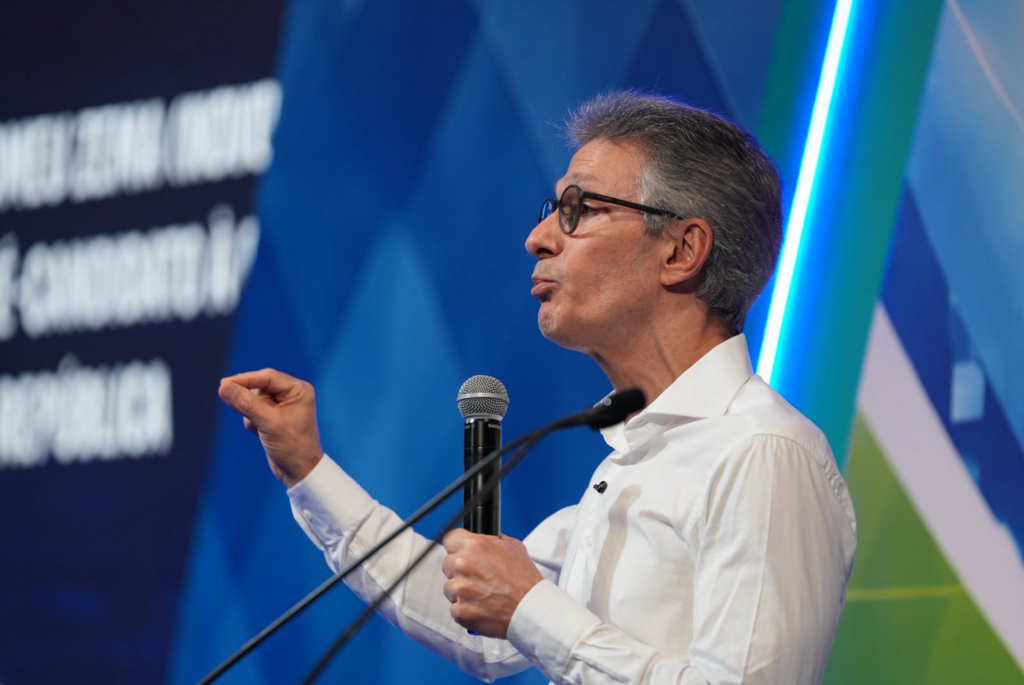
Romeu Zema is 61, a former governor of Minas Gerais and a businessman. Once a supporter of President Bolsonaro, he is trying to set himself apart from Bolsonaro’s son by calling for a hard line on crime and free-market economic reforms. He is running for the libertarian New Party (Novo).
Not only the president: how Brazilian elections work
Brazil is a federal presidential republic, so it is no surprise that the election of the head of state draws the most attention. If no candidate reaches 50 percent, a runoff is held — which happens far more often than not. The vice president is also elected alongside the head of state: candidates run as a pair, much as in the United States. Running for re-election with Lula is his current vice president and former rival from the 2006 election, Geraldo Alckmin. Running with Flávio Bolsonaro is Alfredo Gaspar, a member of the Chamber of Deputies and the rapporteur of the parliamentary inquiry that examined the National Social Security Institute scandal. In March this year he recommended an arrest warrant for President da Silva’s son, Lulinha, which the committee ultimately rejected.
It is also worth noting that, alongside the most widely discussed presidential election, Brazilians are electing members of the Chamber of Deputies and two-thirds of the Senate. The current administration has learned how hard it is to lack a majority in those chambers: it has had serious trouble passing key reforms. Voting in Brazil is compulsory for citizens aged 18 to 70, and optional for those aged 16 to 17 and over 70, although the penalties for not voting are not severe.
The lower house uses proportional representation, and candidates are elected from party lists — much as in Poland, although the electoral threshold works quite differently and is split into national and local levels. If a party fails to clear the thresholds set out in detail, it can still win seats in the Chamber, but it loses a range of privileges, such as public funding and free airtime.
In this year’s Senate elections, each Brazilian state elects two of its three senators. Voters have two votes and can therefore choose two candidates. They cannot cast both votes for the same person; if they do, the second vote is invalid.
Can Brazil resist the right-wing wave sweeping the continent?
In recent years a wave of right-wing victories has swept Latin America, leaving President Lula da Silva at the head of one of the last left-wing governments on the continent. Pre-election polls show a narrow lead for Lula over Flávio Bolsonaro, with the rest of the field far behind — but the closer the election gets, the smaller the gap between them becomes. The scandals everywhere, and the character of a Brazilian campaign, make it impossible to name a single favourite.
Voting takes place on 4 October, and if no candidate clears 50 percent — which currently looks almost certain — the runoff will be held three weeks later, on 25 October. A Bolsonaro victory would give the right near-total control of the countries of South America and politically rehabilitate his father, while a fourth term for Lula could put wind in the sails of a weakening continental left.
Bibliography:
- https://www.aljazeera.com/news/2026/9/22/brazil-election-lula-and-flavio-bolsonaro-tied-in-latest-polls
- https://www.pewresearch.org/short-reads/2026/09/22/how-brazilians-view-their-country-ahead-of-2026-elections/
- https://edition.cnn.com/2025/09/11/americas/brazil-jair-bolsonaro-coup-trial-verdict-latam-intl
- https://www.nbcnews.com/world/brazil/bolsonaros-eldest-son-says-ll-run-brazil-presidency-2026-rcna247686
- https://www.aljazeera.com/news/2025/12/6/flavio-bolsonaro-enters-brazils-2026-presidential-race-with-fathers-nod
- https://www.npr.org/2025/09/11/nx-s1-5535658/bolsonaro-brazil-coup-trial
- https://en.wikipedia.org/wiki/Second_presidency_of_Lula_da_Silva
- https://thedialogue.org/analysis/how-successful-has-lula-been-a-year-after-his-return
- https://www.as-coa.org/articles/brazils-2026-presidential-candidates-lula-bolsonaro-and-other-top-contenders
- https://www.americasquarterly.org/article/brazil-meet-the-candidates-2026/
- https://thedialogue.org/blogs/2026/07/brazils-2026-elections-institutional-design-electoral-technology-and-democratic-integrity