Why Are There No Vignettes in Poland? A Short History and the Operation of Vignette Systems in the V4 Countries
JB
Jakub Brzegowy Aug 2026 · 22 min read
TypeComment
ProgrammeThe Visegrád Group (V4)
IssuedAug 2026
Dear Readers,
This text is not scientific in nature; I would rather it be treated as a “guide with trivia.” It will outline the history that the vignette system has undergone in each country—from their introduction to the present state. I will present their modern operation, maps of toll roads and expressways, and provide practical advice. Next, we will focus on Poland, where their implementation was not straightforward—one could even say complicated.
Vignettes are an indispensable, paid companion for those traveling on the motorways of V4 countries and beyond (11 countries have them in total). Sometimes entering the territory of another country is impossible without a prior payment, because it is not always possible to buy one right before crossing the border. In such a situation, to avoid a costly conversation with police officers, you need to secure yourself in advance. Concluding the introduction, the most important difference between a vignette and a toll booth fee is the very idea of payment. We pay for a period of use regardless of the number of kilometers driven. It can take various forms: paper, a windshield sticker, digital, and electronic. Differences also occur due to the duration for which they are purchased and the vehicle category. However, I will expand on this topic later.
CZECH BEGINNINGS
The precursor to time-based charges for using appropriately marked roads in the V4 was the Czech Republic, which introduced them on January 1, 1995. Until that point, expressways were completely free of charge and treated as a public privilege granted by the state to its citizens. The implementation process itself may not have sparked intense social disputes, but there were divisions within parliament. Václav Klaus’s government, formed by ODS, KDS, KDU-ČSL, and ODA, explained that the charge was justified because it is fair for those who use expressways most often to bear higher costs. They also argued the superiority of the time-based system over distance-based charging due to lower operational costs.
In the justification of draft bill No. 303 itself, one can infer that the government’s primary motivations were accelerating the construction of new motorways, relieving the state budget, and involving the private sector. France, Italy, and England served as practical cases cited in the justification. Opposing them was the Left Block, whose view was that Czech drivers should not pay for roads built with public money up until the end of 1992. Václav Havel did not exercise his veto right, and Act No. 134/1994 ultimately came into force on January 1, 1995.
The fee applied to motor vehicles—both passenger cars and trucks, and initially even motorcycles. Out of 651.2 kilometers of motorways and expressways, 569.9 were covered by tolls. The only vignette available for purchase covered a period of one year and cost from 400 CZK for a passenger car up to 2,000 CZK for vehicles weighing over 12 tonnes. In 1997, a new road act came into force, which under Section 22 exempted motorcycles from fees and improved existing solutions. Under its provisions, the Ministry of Transport became responsible for the operation of the system and toll collection, enforcing driver compliance together with the Police of the Czech Republic.
In 2000, 10-day and monthly payment options were introduced, which we still see today. Important changes took place in 2007 and 2010. On their basis, an electronic toll system was launched for vehicles exceeding 12 tonnes and in the 3.5t–12t range respectively, the amount of which was based on the distance covered. From 2008, vehicles over 3.5t also had to pay for using certain Class I roads (de facto the most important intercity connections).
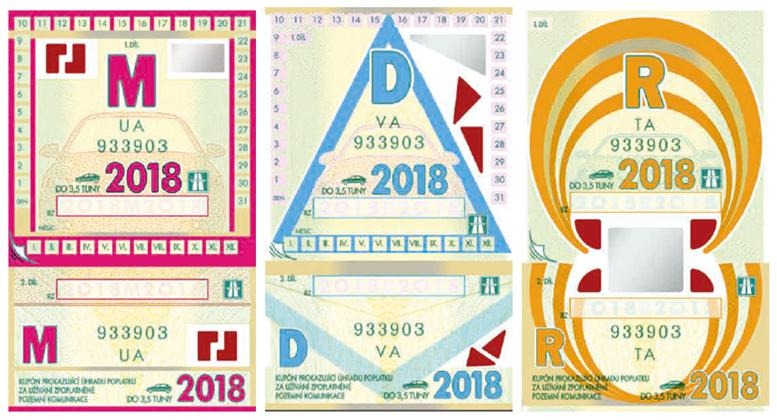
The vignette took the form of a two-part coupon. One part was a sticker applied to the windshield, while the second part was kept as proof of purchase. The paper system ended in 2021, when the vignette became completely electronic.
HOW DOES THE CZECH SYSTEM WORK CURRENTLY?
Due to the digitalization of the vignette purchase process, it has become simpler and faster. There are many websites offering purchases: winiety-online.pl, czechvignette.cz, www.vintrica.com, but the official one is edalnice.gov.cz. If someone is a traditionalist, they can buy vignettes at petrol stations, in self-service devices similar to standalone ticket machines, or at point-of-sale locations. Although in the case of the latter, it is worth watching out for creative “scams” with inflated prices, a good example of which is this video clip:
When purchasing a vignette, we provide the necessary data, although the most important is the license plate number, which is read by cameras on gantries, rest areas, patrol cars, and speed cameras. The sequence is: camera -> license plate number -> vignette database -> vignette valid/invalid/vehicle exempt from purchase.
Any attempt to drive without paying will end in a stop by a police officer or a notification from the customs administration. Previously, inspections were carried out visually by checking stickers or proof of purchase. If we receive a fine, we must pay it on the spot. Otherwise, the Czech police will retain our vehicle registration certificate until the matter is resolved.
If we make a mistake when purchasing a vignette while entering data, extensive editing is possible before the vignette activation date as well as after (in the latter case, the window is much narrower and covers two characters).
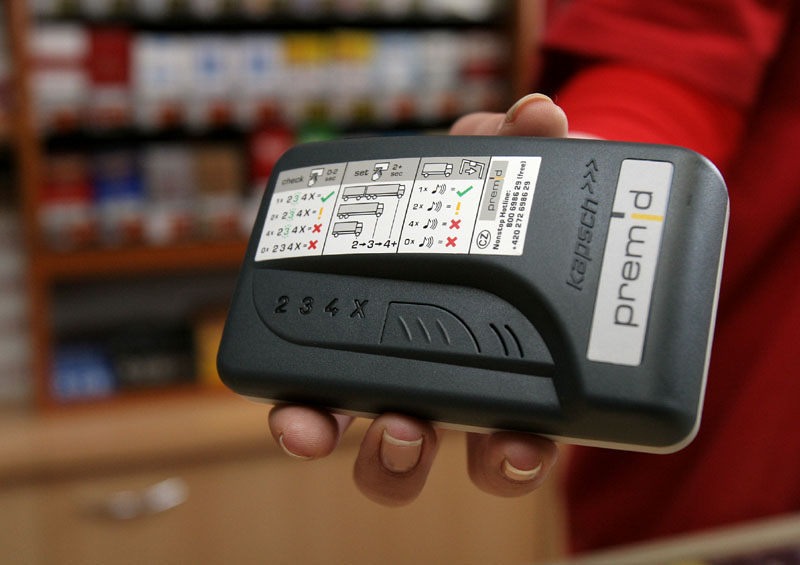
The situation looks different for vehicles over 3.5t. As I explained earlier, since 2010 the toll has been calculated based on the distance covered. The technical operator of the entire system was Kapsch, with whom you had to pre-register. For the toll to be calculated, you had to order a PREMID device, which used microwave technology and connected to the automatic toll collection system.
To receive it, you had to visit a PREMID information or distribution point. There, you could register the device, pick it up against a deposit fee, and conclude a pre-paid or post-paid contract. Pre-paid worked very similarly to phone top-ups when you want to temporarily increase your mobile data allowance. Using cash, a credit card, or a fuel card, you deposit an amount that is consumed while driving. Post-paid could only be concluded at an information point or through a fuel card operator intermediary. It was a payment calculated on the basis of the entire route driven.
Costs prior to the trip could be calculated after entering vehicle parameters using the calculator on the www.premid.cz website. Fees depended on the number of axles and the emission class of harmful substances. Checks occurred at gantries or via mobile inspections by employees of the General Directorate of Customs of the Czech Republic. The monitoring system operated around the clock, so any irregularities in toll calculation or incorrect data were transmitted along with an automatically taken photo.
From 2019, two key changes took place. First, microwave technology was abandoned.
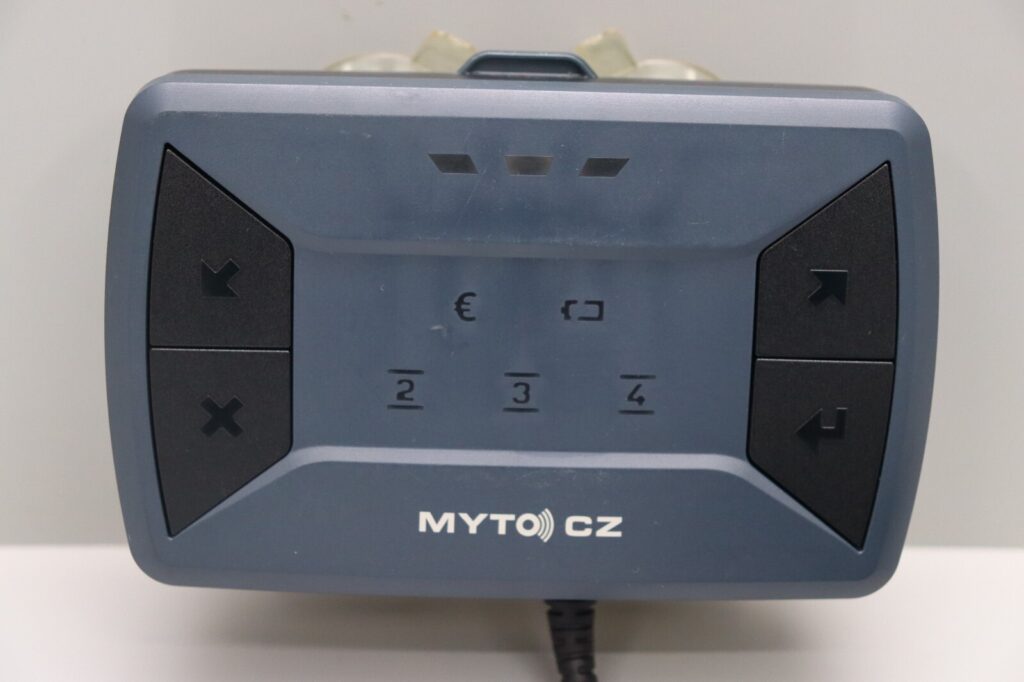
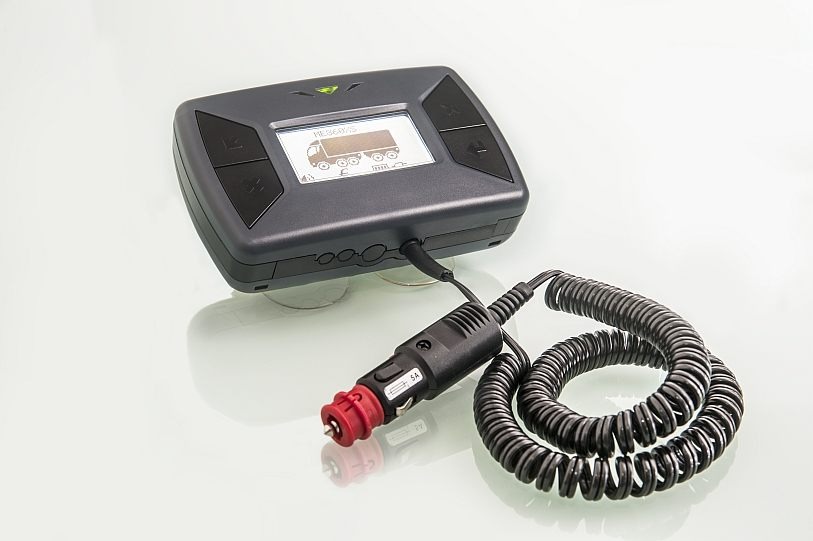
The new Billien OBU device uses GNSS, mobile networks, and DSRC, while PREMID ceased to be compatible. Slovakia has its own version, but more on that later. The system recognizes a moving vehicle through virtual points; the formula is the segment length multiplied by the vehicle rate. In its philosophy, the inspection works practically the same, it just uses a different form of communication with the receiver. The rate itself depends on the road type, weight, number of axles, vehicle category, EURO standard, and CO₂ emissions. So, as you can see, the number of variables was significantly expanded.
The second change is the technical operator. Formally, the system operator and toll collector is the state-owned ŘSD, but its operation is provided by CzechToll, operating within a consortium with SkyToll. CzechToll itself defines itself as a “provider and service provider of comprehensive system maintenance” based on an agreement concluded with ŘSD in 2018. However, it does not set the rates or the scope of toll roads—both belong to ITIS Holding, and they are sister companies jointly competing in tenders.
This is interesting because vignettes for vehicles up to 3.5 t are handled entirely by the state-owned SFDI and CENDIS. I recommend watching the video at the link below, where the SOSEN channel explains the operation of the device itself.
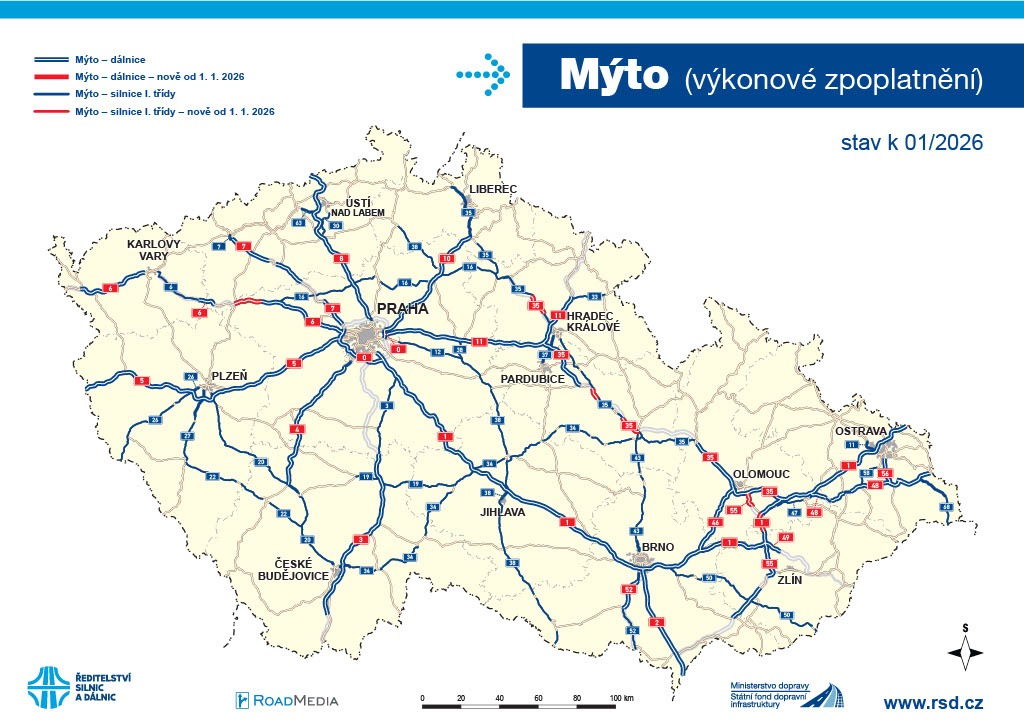
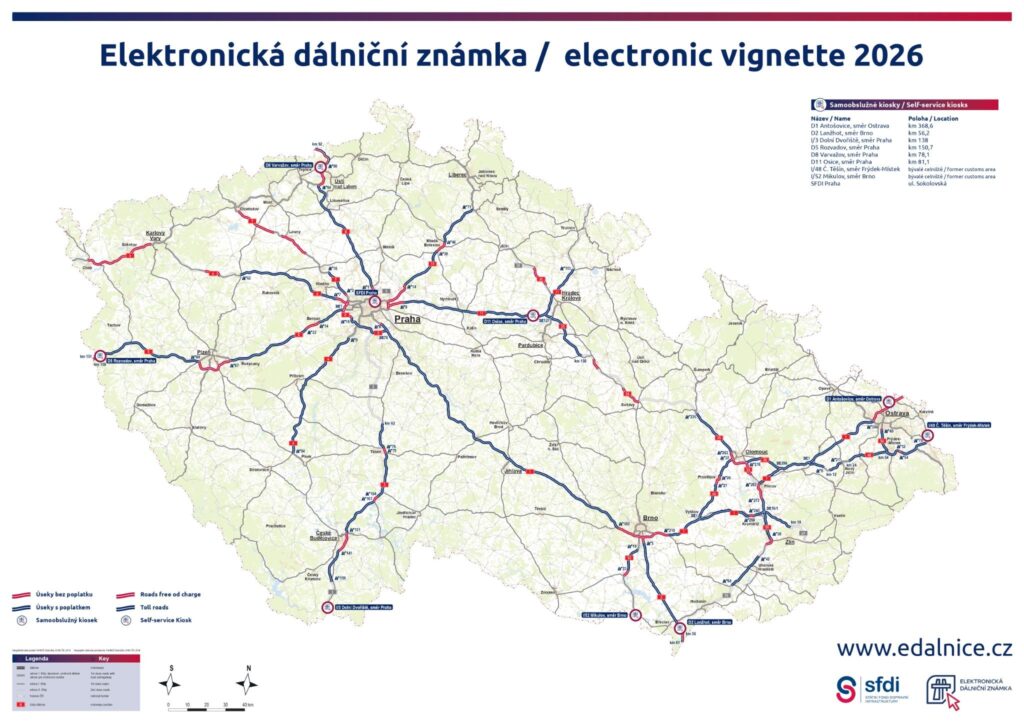
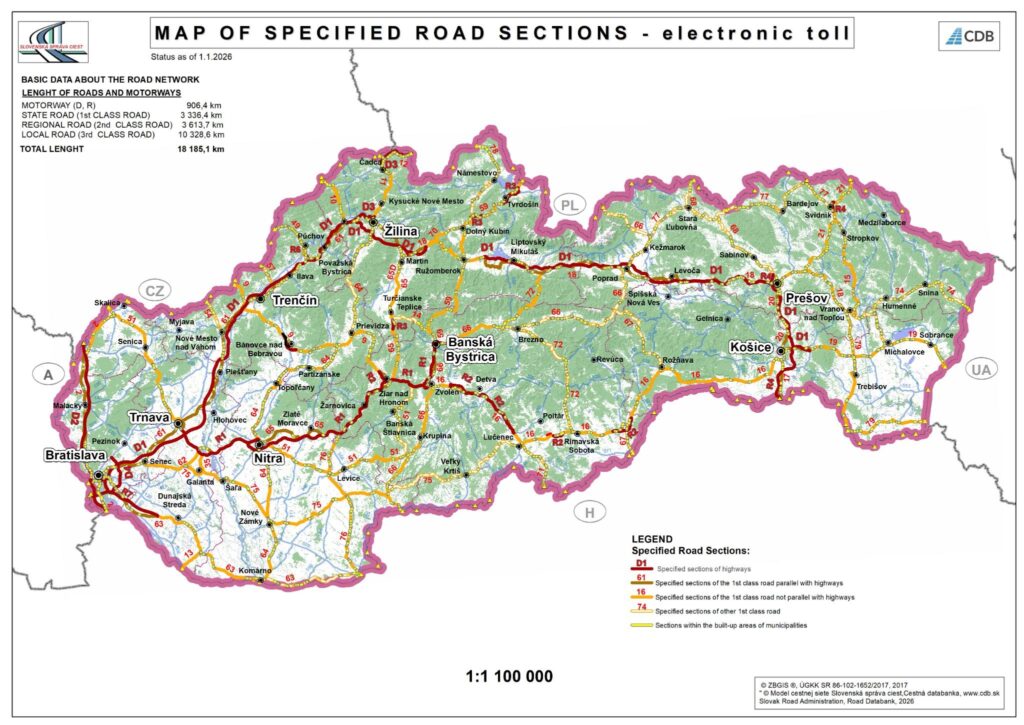
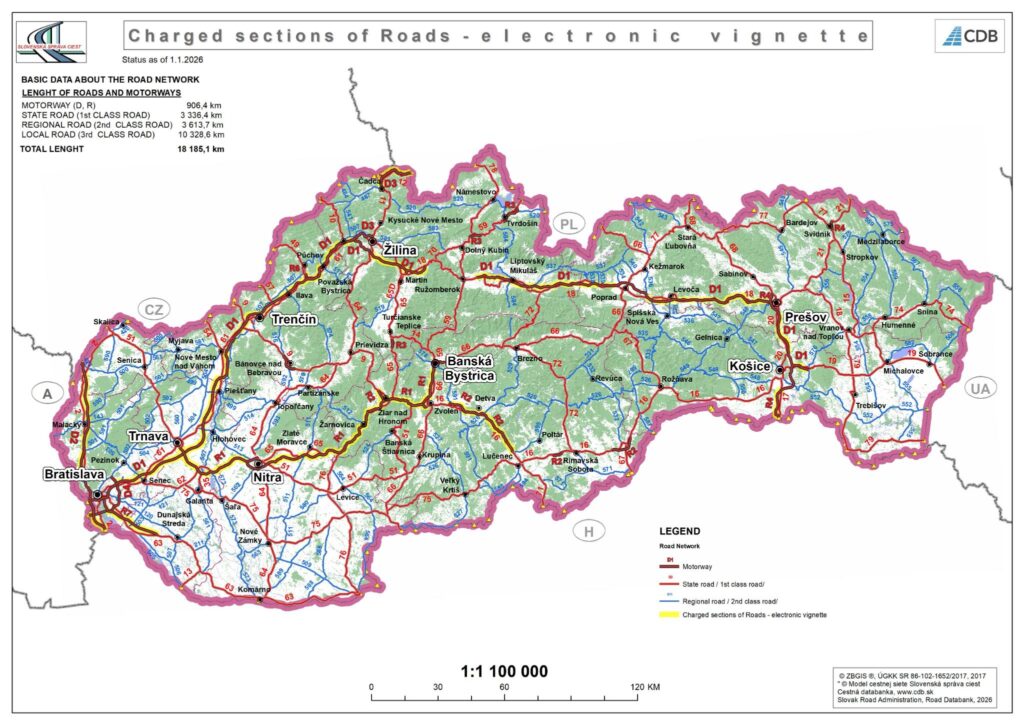
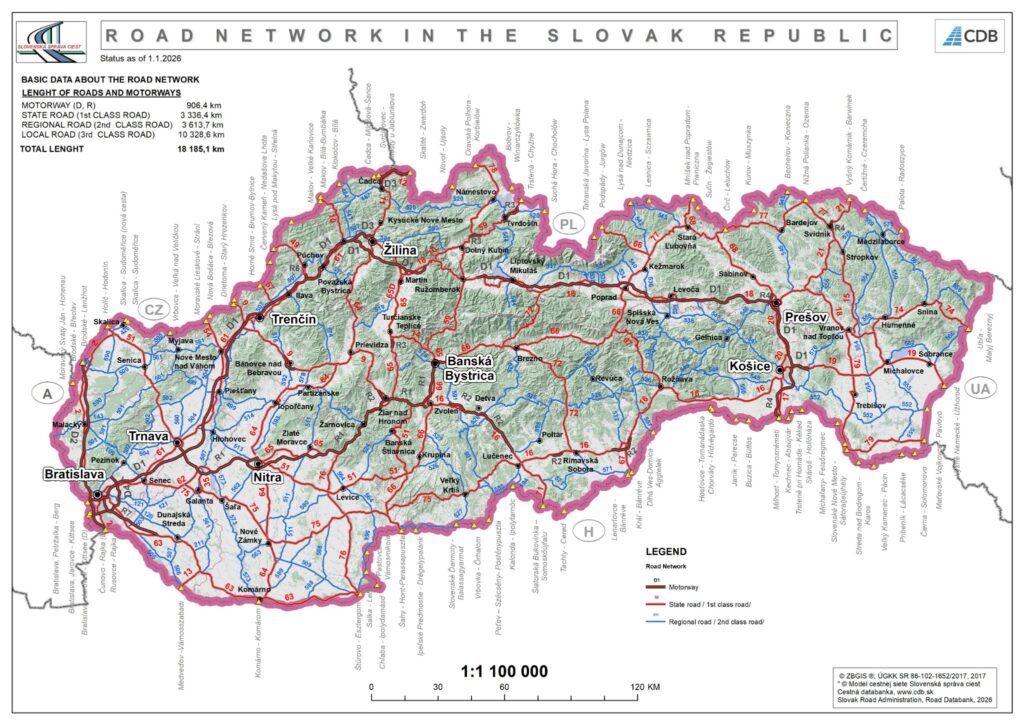
Here we share current maps of the coverage of toll roads:
SLOVAKIA
Until June 30, 1996, regular transit on Slovak motorways remained free of charge. Although the regulations provided for fees or permits for special road use, for example, for oversized transport. In other words, we had a twin-like situation to our Czech neighbor.
Vignettes themselves did not have dedicated legislation; they were part of the discussion surrounding the new major Act No. 160/1996, which amended its predecessor across 25 paragraphs in multiple directions. The vignette topic appears in Section 6 (2) and read as follows:
“Designated sections of motorways and roads for motor vehicles marked with appropriate traffic signs and boards may be used by two-wheeled vehicles (hereinafter referred to as ‘motor vehicles’) after paying a fee for the use of these roads (hereinafter referred to as ‘reimbursement’). The amount of reimbursement shall be determined on the basis of the total weight of the motor vehicle, which shall be understood as the sum of the weight of the motor vehicle and the trailer. The reimbursement is paid without regard to the time of use and the number of trips according to the tariff allocated to this Act.”
In (3), exemptions were also specified for e.g., the police, military police, motorway administrators, and other emergency vehicles. In (4), (5), and (6), stickers were introduced, police authority to inspect them was established, and the State Road Insurance Fund was granted the right to distribute, sell, and exchange stickers.
As for the payability itself, it met with fairly broad parliamentary acceptance. Discussions mainly concerned the level of rates and the number of privileged vehicles. The motivations provided in the justification were primarily financial and were intended to serve the implementation of government motorway construction programs. The decree of the Ministry of Transport, Posts and Telecommunications of the Slovak Republic of June 13, 1996, defined the scope of toll roads, the fee amounts, and the exact design of the stickers.
In 2007, under Act No. 25/2007, the foundations were laid for a distance-based electronic toll for vehicles weighing more than 3.5t. Ten paragraphs described, among other things, what technology was required, how the amount was collected, mentioned the onboard unit, the method of calculating the fee rate, and listed the state-owned company Národná diaľničná spoločnosť as the data administrator.
Shortly thereafter, in July 2007, a tender was launched for a 14-year contract worth 600 million euros, which was won by SkyToll, competing against Kapsch, Siemens, Sanef, and Slovak Telekom, among others. The contract was signed on January 13, 2009, and the system was launched on January 1, 2010. A GNSS satellite solution was used, supported by DSRC microwave technology for vehicle inspection.
The launch of the system was not the easiest. Protests from carriers complaining about the excessive scope of toll roads and high costs coincided with the entry into the Eurozone. Throughout the preparation period—meaning between 2007 and 2009—traditional, two-part motorway stickers were still sold: one part went on the windshield, while the second served as a control coupon. The registration number was written on it. Holograms, barcodes, microtext, and anti-tampering protections against re-sticking were used. They covered both light vehicles and heavier vehicle categories.
Just like in the Czech Republic, from 2010 onwards we had a very similar mixed system. However, the law for vehicles up to 3.5t, which was a constantly amended Czechoslovak law from 1961, began to be perceived as archaic. Hence, amendments were made in subsequent years, culminating in a separate Act on Vignettes No. 488/2013, which introduced legal foundations for electronic vignettes.
On January 1, 2016, a full transition to the e-vignette occurred, resulting in stickers being phased out. Similar to the Czech Republic, a private company (SkyToll) became the technical operator, while the state remained the collector and manager. Over the following years, the system stabilized to smooth out imperfections, a good example of which was a change in 2020. This consisted of changing the fact that the old annual vignette was tied to the calendar year rather than a flexible purchase date. This was naturally changed. Until 2024, we had an interesting situation where two versions of annual vignettes functioned side by side.
PRESENT TIMES
The method of purchase does not differ significantly from the previous case. We have an official website operating in Polish: eznamka.sk, used for purchasing e-vignettes. Options available are 1-day, 10-day, 30-day, and annual. This does not apply to motorcycles. If you exceed 3.5t with your passenger car combination, you must purchase an additional vignette for the trailer. In addition to the official website, there are mobile apps, self-service sales points, and, naturally, intermediaries.
Proof of purchase is not required during an inspection, which takes place automatically via roadside devices and control gantries that read license plates and communicate with the OBU device. Mobile units are also present. You must be very careful when entering data. Editing is only possible in the case of a purchase with a future date and is limited to 15 minutes. There are also no refunds.
Regarding the entry of vehicles over 3.5t, the procedure is very similar to the Czech one and is as follows:
Vehicle registration (eMyto website, customer service point, or EETS) -> submission of vehicle documents, registration number, country of registration, maximum permissible gross weight, number of axles, EURO category, and CO₂ emission standard -> registration, installation, and payment of a 50 euro deposit -> pre-paid or post-paid contract -> driving with properly functioning equipment.
FROM TOLL BOOTHS TO A UNIFIED VIGNETTE
Unexpectedly, it was in the country of the then Republic of Hungary that the legal foundation for tolls was introduced earliest. Act No. I of 1988 in Articles 33/A and 33/B provided the following powers:
“Art 33 (2) The public road administrator, the body or organization authorized to collect fees for road use and to supervise its participation, and the body designated under Article 21(4) may register the vehicle and its official mark to prove the commission of offenses specified in the government decree in accordance with Article 21(5). The public road administrator, the body or organization authorized to collect fees for road use and to supervise its payment must immediately transfer the register prepared by it to the body designated under Article 21(4). If the organization authorized to check penalty payments does not have the right to collect the penalty claim, it immediately forwards the notification to the organization authorized to collect the penalty without delay. * (3) Entities specified in point (2) may use an entity for recording and transmitting. * (4) * (5) The Minister coordinates the activities of national public road administrators, finances the road management service, and supervises the provision of services specified in the operational agreement. * (6) During the implementation and operation of the electronic toll collection and toll control system, the road management organizations listed in point (1) will cooperate with organizations designated to perform specific tasks, contributors, and the contractor of the electronic toll collection and control system. (7) The operation of complex traffic control points will be carried out by the public road administrator—in accordance with the provisions of the agreement concluded with the central body of the authority established to perform general police tasks.”
Article 33/A emphasized the status of the operating company as an executor of state tasks and their scope, the payment settlement method, offense prosecution procedures, and purchase locations for usage rights. Article 33/B, in short, gave authority over setting fees, sections, fines, and payment terms to the Minister of Transport, and regulated personal data processing. It established the superiority and control of the state apparatus over toll collection.
In January 1996, the M1 Győr–Hegyeshalom section, as the first private motorway, launched a concession fee collected at toll booths for a 43 km stretch. It was not yet a vignette. The rate was tied to driving a specific section. By 1998, the M3, M15, and M5 motorways joined in.
Until 1998, roads were funded through citizens’ taxes. Due to budget deficits, infrastructure needs, and the privatization of road companies, motorway tolls in the first half of the 1990s were intended to be a remedy for the state’s troubles. Importantly, there was no single technical operator. M1/M15 was operated by the ELMKA consortium, M5 by AKA, and the remaining sections by state companies.
However, this situation did not last very long. It turned out that a huge number of Hungarians avoided toll sections for cost-saving reasons. It also did not help that per kilometer, the prices for driving on the M1/M15 were the highest in Europe at the time. By contrast, the M5 and M3 fared quite well. However, it is impossible to control a completely mixed system. The Hungarian Automobile Club began demanding unification, positioning the state as the sole guarantee to escape the crisis. This issue was also exploited by the opposition, which, based on a cross-party consensus, decided to replace ELMKA with the state-owned company NyuMA and reduce the toll on the M1/M15 by 50%.
In this situation, Decree 45/1998 was created in 1998, introducing vignettes. In 2000, based on a government decree, they debuted on the M1 and M3 motorways as a means to cover maintenance and operation costs only, but most importantly, they received a positive response from drivers. AKA survived, but had to participate in the standardized system, giving up toll booths (dismantled in 2004). The process of creating a nationwide system lasted until 2004.
The years 2005–2008 were a transition period in which experimentation began with online, SMS, and telephone sales. In 2007, two regulations (36 and 37) were created, based on which the first e-vignette debuted on January 1, 2008. As for expressways, they were gradually brought under tolling from 2007 onwards. The process accelerated significantly in 2015, but the rule that every single one without exception must be paid was never introduced.
CURRENT SITUATION
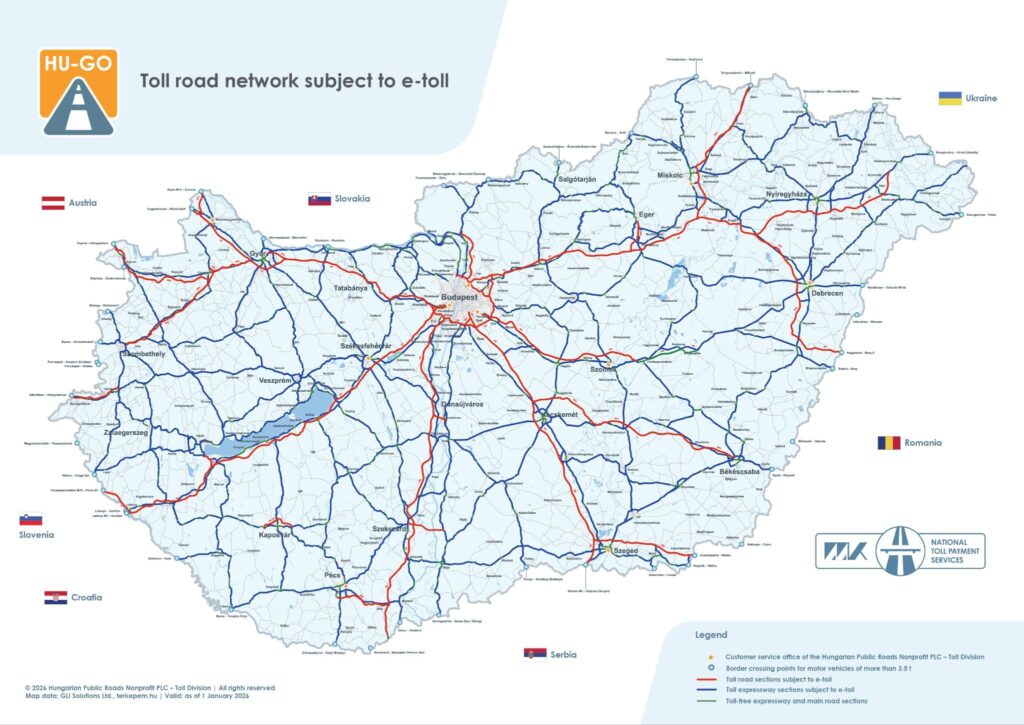
Regarding trucks, the HU-GO system was launched in 2013, introducing a distance-based fee for vehicles over 3.5t. The technical operator was the state-owned company NÚSZ, which was also responsible for passenger car e-vignettes. This changed as of January 1, 2026, when NÚSZ’s toll-related tasks were transferred to Magyar Közút (Hungarian Public Roads), the state-owned company managing around 31,000 kilometers of national roads. This is where you can register for the system. The website has a Polish translation:
The step-by-step purchase procedure is similar to the previous examples, but has one significant exception. Here you will find user instructions in English (redirects to the main screen after selecting Polish):
In simple terms: we register on hu-go.hu and provide the required data, buy a measuring device from a declared operator, sign a contract, register the device in the system, top up, and set off. We have two forms of devices—installed in the vehicle and mobile. As I said, this is a simplified description. While the idea is practically the same as in the Czech Republic and Slovakia, it is much more complex and requires careful reading of the instructions provided in the links. The national road manager’s website, Magyar Közút Nonprofit Zrt., itself recommends contacting customer service.
Returning to the exception: driving without system registration is possible by purchasing a ticket on the website. It is then valid from the date of purchase, and its validity period is 300 minutes. There is no possibility of advance purchase or refunds.
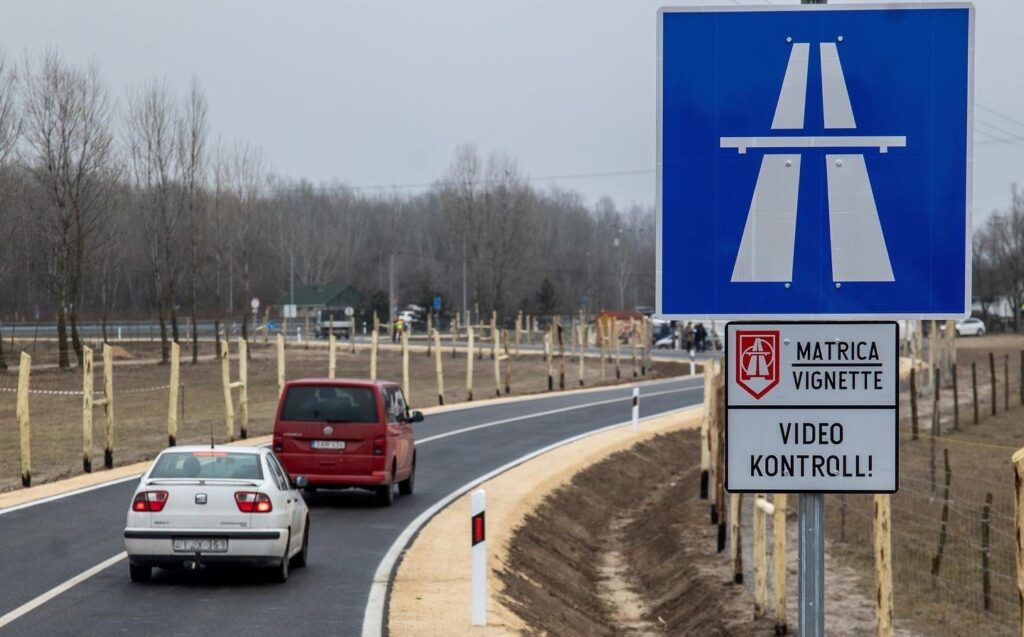
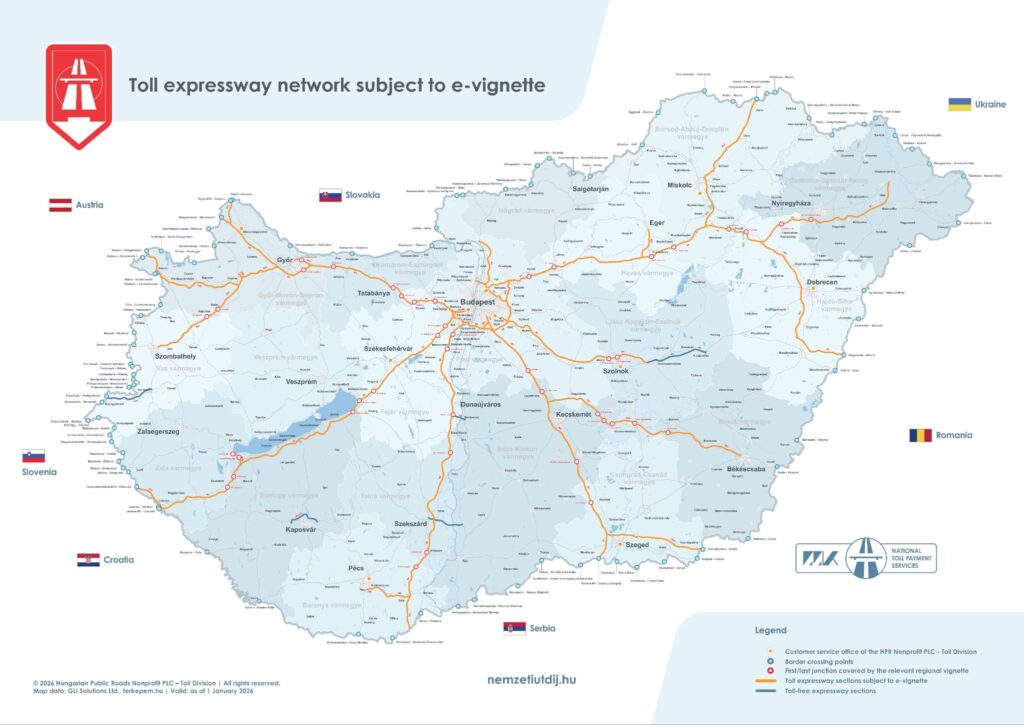
For passenger cars, there are many types of vignettes: 1-day, 10-day, monthly, annual national, annual county (comitat), and regional M1. There are also 4 categories: D1M, D1, D2, and U for different purposes. The purchase process is much simpler, and I recommend watching the video on the 4LiveTechTv channel, as it is explained brilliantly with a practical example.
You must buy the vignette before entering a toll road and keep the confirmation with you. In 2018, a “60-minute clause” was introduced for the forgetful, giving drivers a chance to purchase one even after traveling on a section. After 2015, an interesting alternative to traditional e-vignettes appeared: county vignettes (a county, or komitat, is a administrative division name used since medieval times). Thanks to it, you can drive on any toll road within a specific county. It is significantly cheaper than an annual one, but you need to be careful and know the administrative division of Hungary.
POLAND AND VIGNETTES
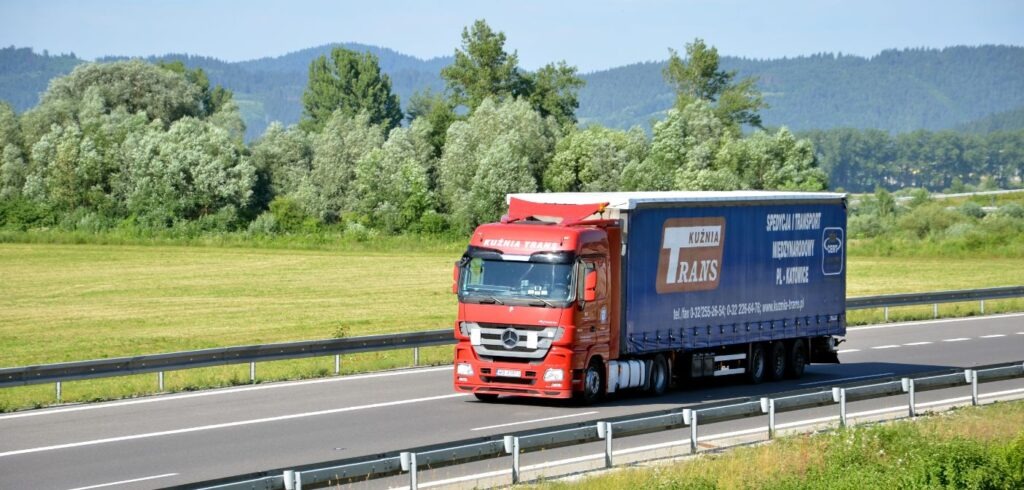
In Poland, vignettes functioned, but not entirely in the same way. The main difference was that Polish vignettes did not generally cover passenger cars. They were intended for road transport by trucks and buses. The system was introduced on January 1, 1998, based on a regulation of the Minister of Transport of December 3, 1997. Initially, the regulations referred to national roads used in international road transport. The driver or entrepreneur bought a paper “fee card” valid for a specific period. Daily, 7-day, monthly, half-year, and annual cards were available, and their price depended on the vehicle type and gross vehicle weight rating. Designs of the first cards: https://api.sejm.gov.pl/eli/acts/DU/1997/993/text.pdf.
Over time, the fee amount began to be differentiated not only by weight, but also by the number of axles and exhaust emission standards (a common point for the whole V4), and the fee was time-based. From October 21, 2006, the card took the form of a classic vignette system, i.e., two parts: a self-adhesive sticker placed on the windshield and a control slip kept in the vehicle. During an inspection, both parts had to be presented. Here is a link showing the sticker designs: https://sip.lex.pl/akty-prawne/dzu-dziennik-ustaw/oplaty-za-przejazd-po-drogach-krajowych-17297109
The Supreme Audit Office (NIK) defined this system as a “flat fee depending on the time of infrastructure use”.
WHY WAS IT DECIDED TO PHASE OUT VIGNETTES?
I notice 3 main factors. First, the unsuccessful attempt by Minister of Infrastructure Marek Pol to introduce vignettes for passenger cars, which damaged their reputation. Second, double fees were imposed on carriers: a vignette for the national road, and then a toll booth for a private entity’s section. In 2005, it was decided to address this: drivers were exempted from payment at toll booths and allowed to pass upon showing a vignette. However, the concessionaire had to get paid for this, and those funds were paid out by the National Road Fund (KFD). This created a situation of severe financial pressure on the KFD and complicated exchanges between state entities and motorway companies.
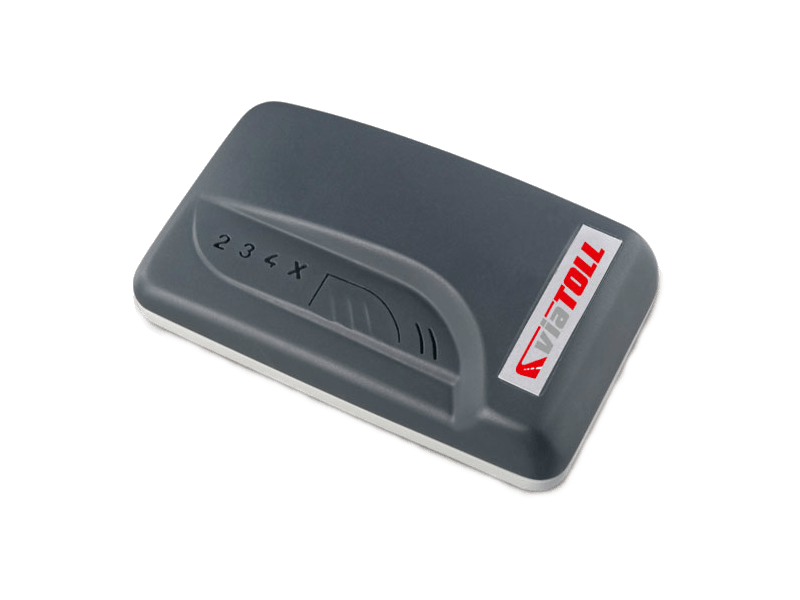
And third, it was decided that a kilometer-based system in Polish realities would be more leak-proof, understandable, and fair for users traveling less frequently and over shorter distances. Overall, the idea of toll collection was not questioned, but the payment method itself had to go. On November 7, 2008, an act amending the old system was passed, gradually phasing out the sale of vignettes. This process lasted altogether until 2011. That was when viaTOLL made its debut:
Trucks and buses received viaBOX devices that communicated with gantries installed over the roads. Carriers stopped buying the right to use roads for a week, month, or year, and started paying for specific kilometers. In 2021, viaTOLL was replaced by the state e-TOLL system, utilizing GNSS satellite positioning. Current rules are described by the Ministry of Infrastructure.
How to cite
Jakub Brzegowy (2026). Why Are There No Vignettes in Poland? A Short History and the Operation of Vignette Systems in the V4 Countries. TC/2026/15. Terra Cracovianum, Kraków.