The fall of (another) Franco-German future tank programme
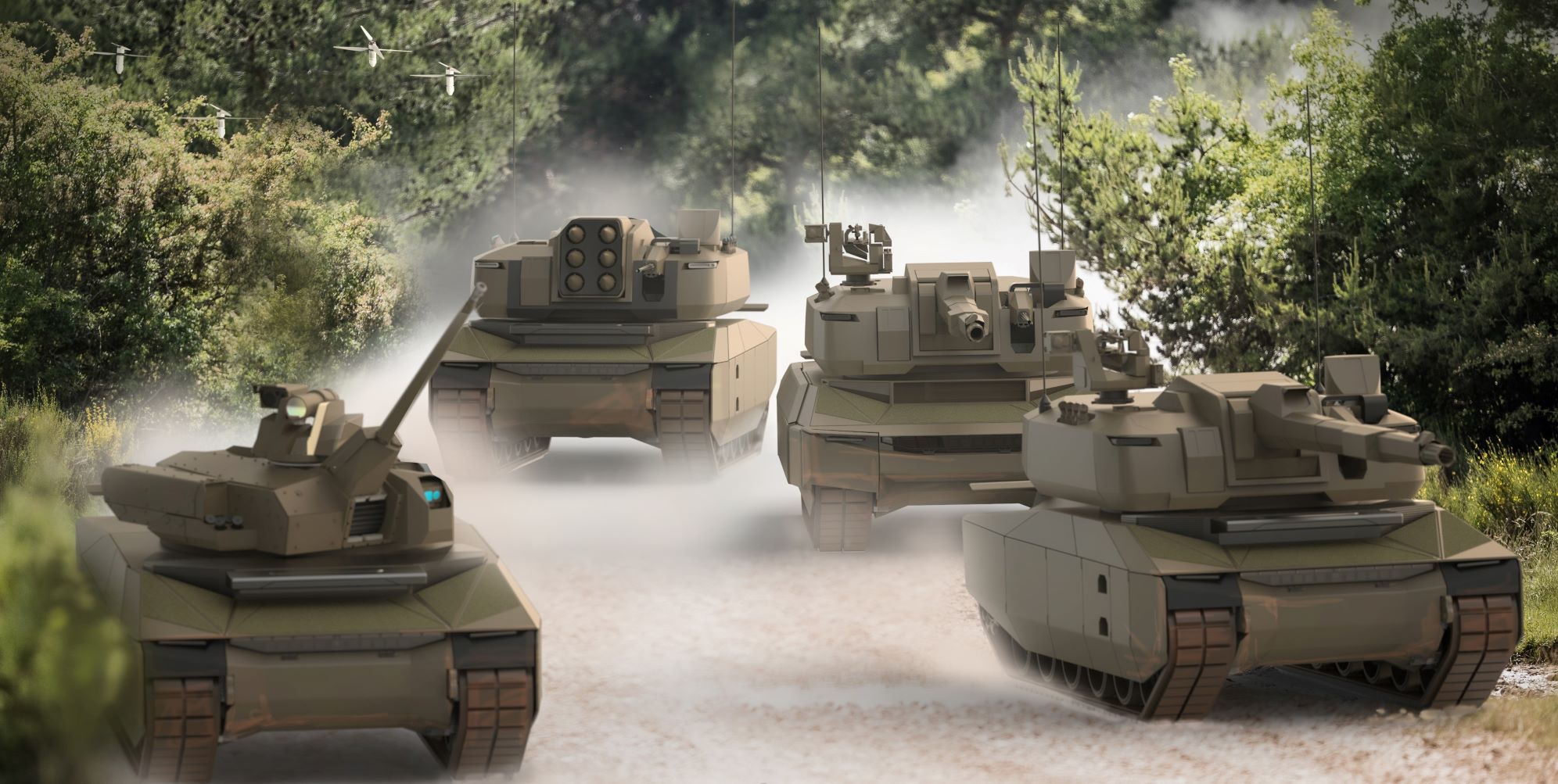
Recently, in August this year, I wrote an article for our association outlining the history, course and then-current state of European future tank programmes, with particular emphasis on probably the best-known of them – the Franco-German programme codenamed Main Ground Combat System (in Polish: Główny Lądowy System Bojowy), abbreviated MGCS. Launched in 2017, it assumes – or at least assumed – the development of an integrated combat system in which four types of vehicles based on the same chassis are to be included. These are: a manned vehicle armed with missiles, an unmanned vehicle with sensors and NLOS (Non Line Of Sight) effectors, an engineering vehicle, and a manned fire platform – that is, a tank, which is probably the most associated element of this programme. MGCS – despite the fact that almost a decade has passed since its launch – is still in the conceptual and research phase. This is mainly due to continuous disputes between Paris and Berlin over the division of responsibilities and the very concept of the new tank. This has caused the programme to be significantly delayed compared to the original assumptions, and the start of serial production is planned for the years 2040–2045, that is, only in at least 14 years. Or at least those were the plans, because due to the events of recent weeks it can be considered that we will not see that tank at all.
C’est fini? (Is this the end?)

On 8 October, during a meeting of the National Defence and Armed Forces Committee of the French National Assembly, the Chief of the General Staff of the French Armed Forces, Gen. Fabien Mandon, was asked by Laurent Jacobelli, a parliamentarian from the National Rally, about the state and possible failure of the MGCS programme.
In response to this question he stated:
(this can be put in some kind of box or something because it is a 1:1 quotation of the general’s statement)
“The result is not good, (…) we had hoped to build the future tank in cooperation with the Germans and it must be stated that unfortunately the Germans have decided to leave the project. But for me this is not a complete failure, it is a significant choice on the part of Germany. Our land forces have cooperated with each other for several years in order to rethink what the future battle tank should be. And we know that the main assumptions regarding the tank have been approved, it was not work in vain.”
Although the general’s statement clearly says that the MGCS programme is to be continued, it simultaneously shows that its most important and most media-visible element – that is, the joint tank – has been cancelled.
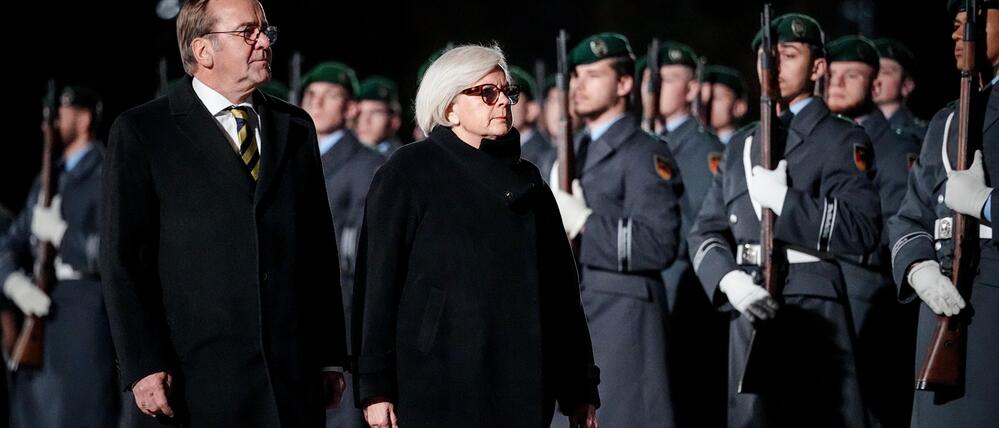
The general’s statement caused a huge stir online. Because the joint tank was the flagship part of the project, questions arose about the future of its remaining part. This caused the heads of the defence ministries of France and Germany, Catherine Vautrin and Boris Pistorius, to meet the next day in Bordeaux, where they denied the rumours about the cancellation of the project. They stated that the initiative has not been abandoned at all, but is only undergoing a change of assumptions, and the initiative itself is still being developed. However, it was not specified whether the joint tank will ultimately be created. It can therefore be considered that although the MGCS programme will be continued, its most important element, that is the tank itself, has unfortunately been cancelled.
Cursed cooperation?
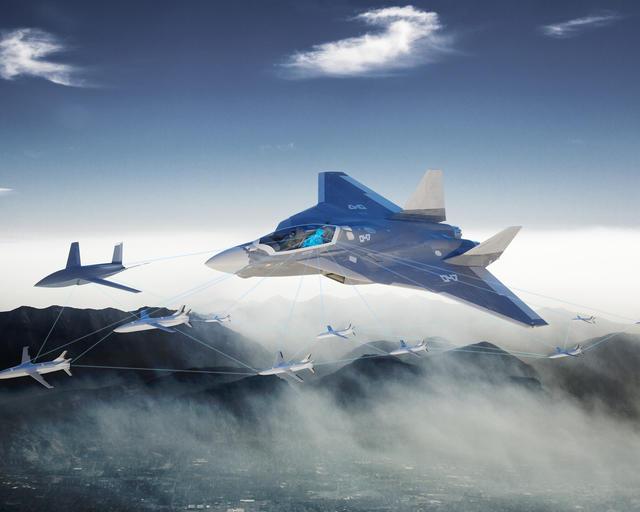
It is worth noting that MGCS was not the only Franco-German armament programme that has fallen recently. A very similar fate befell the Future Combat Air System (abbreviated FCAS) project – aimed at building a joint future fighter by France and Germany together with a communication system and unmanned wings – which was terminated in June this year. The reasons for its cancellation are almost identical to those in the case of MGCS: a dispute over leadership of the project and differences in requirements. France needed a fighter capable of operating from aircraft carrier decks and carrying nuclear weapons, while Germany preferred a twin-engine aircraft design with long range and high ceiling. Another example of a similar fiasco is the Europanzer programme from the turn of the 1950s and 1960s, mentioned by me in the previous article, which – similarly to MGCS – was intended to develop a joint future tank. In the same way, however, differences in requirements and conflicts over the division of roles buried that programme.
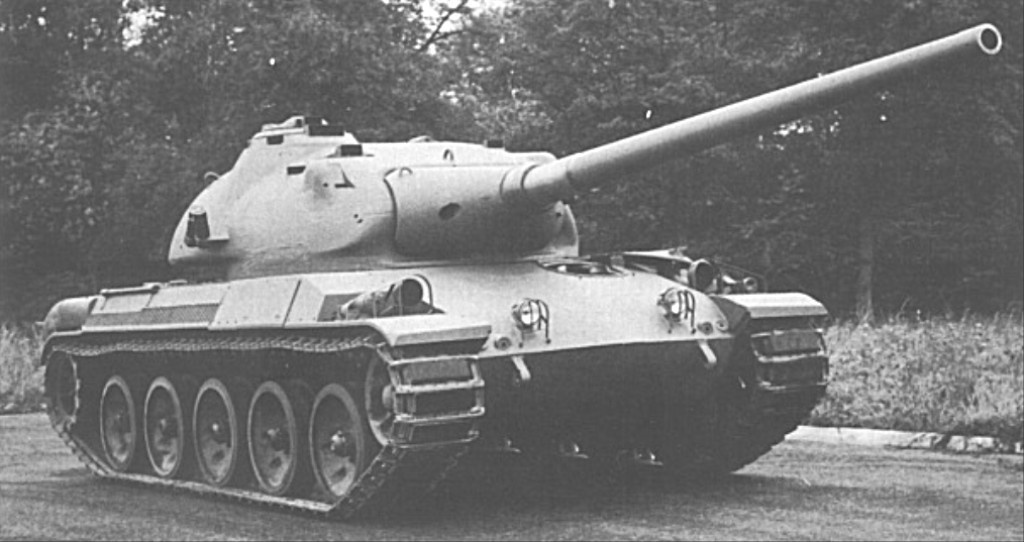
These examples show how difficult it is to develop joint, “pan-European” armament programmes. Very often – despite strong political will – these programmes end up in the bin because of divergent assumptions and disputes over leadership. This applies at least to their main modules, since certain aspects can be reused and continued. While in the case of FCAS the fighter itself was cancelled, both sides announced that the unmanned systems and communication systems developed within this programme will be continued. The same applies to the Europanzer programme – despite its failure, the experience drawn from it served to create separate armoured projects: the French AMX-30 and the German Leopard 1. The situation with MGCS seems to look similar. Although we will rather not see the realisation of the idea of a joint tank, most probably – following the example of Europanzer – we will instead receive two separate vehicles.
MGCS is dead, long live… well, what exactly?
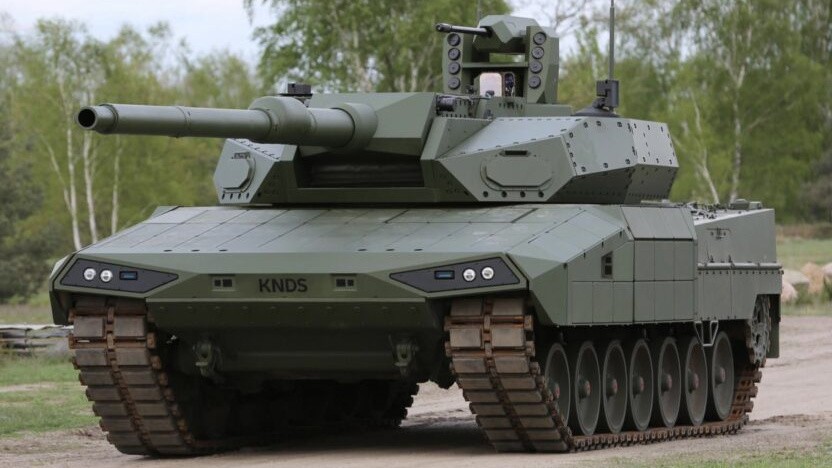
In the case of Germany it is almost certain that the role of the future tank for the Bundeswehr will be taken over by the Leopard 3, currently being co-developed by the Rheinmetall concern and KNDS Deutschland (formerly Krauss-Maffei Wegmann). As for France, it will most likely be the CAPINT tank presented at this year’s Eurosatory fair and developed by KNDS France (formerly Nexter Systems). Its name is an abbreviation of CAPacité INTermédiaire, which means “intermediate capability” or “transitional capability”. The machines in question have already been characterised by me in the aforementioned text.
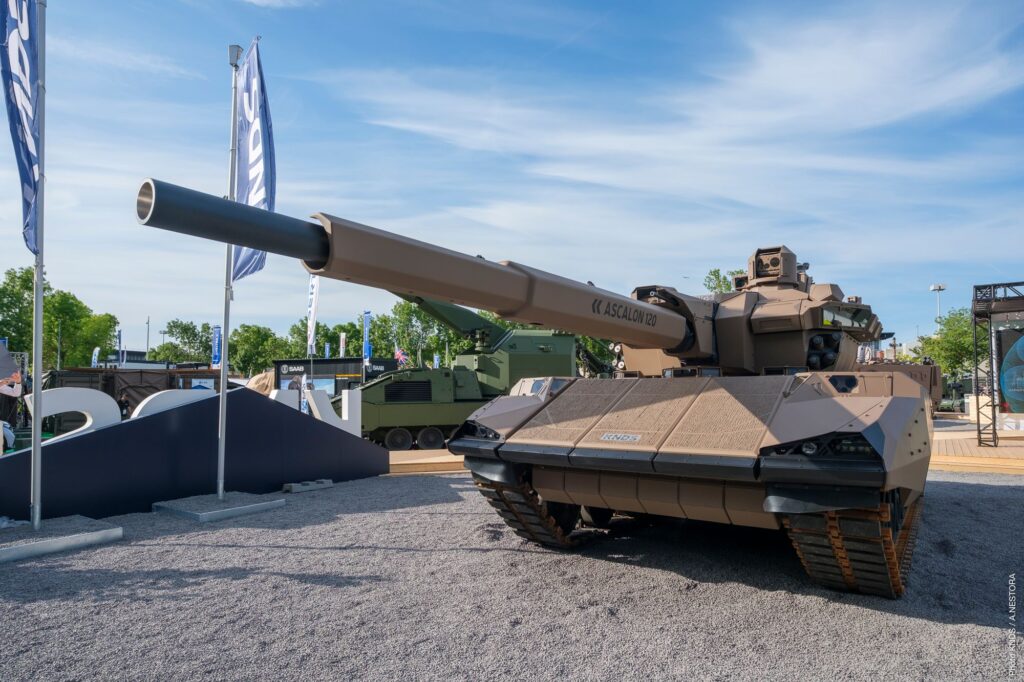
This solution may, however, constitute a certain problem for the French side. While the Leopard 3 will most probably be a fully German design, CAPINT will remain to a certain extent dependent on Germany – more precisely on German propulsion units and hulls. Although before CAPINT other solutions consisting of a significant modernisation of Leclerc tanks were proposed, these plans were rejected. France has in fact lost the ability to produce new hulls for these vehicles, and especially the complicated V8X-1500 Hyperbar engines equipped with an integrated Turbomeca TM-307B gas turbine. These engines, due to their relatively small size, mean that no other drive can fit into the original Leclerc hull. This has caused CAPINT to use a modified Leopard 2 chassis as well as its standard powerpack. As a result, France will become fully dependent on Germany when it comes to the supply of chassis for its tanks.
Summary
The cancellation of the joint tank within the MGCS programme is another example of the difficulties faced by joint Franco-German armament programmes. Instead of it, both countries will strive to create their own vehicles, with France being forced to a certain extent to use German solutions. Ironically, this means that France will probably end up with a German-French tank – with the difference that it will operate it alone. Germany, on the other hand, will be able to afford a completely indigenous product.
Bibliografia:
Original in Polish, translated by the use of Grok Ai
Article
- Klęska fancusko-niemieckiego czołgu przyszłości. Stracone miliardy i lata (9 października 2026) Defence24.
https://defence24.pl/przemysl/kleska-fancusko-niemieckiego-czolgu-przyszlosci-stracone-miliardy-i-lata-opinia#goog_rewarded - Spotkanie Komisji Obrony Narodowej i Sił Zbrojnych Zgromadzenia Narodowego przed Francuskim parlamentem (8 października 2026) https://www.youtube.com/watch?v=qsocuYs0aDw
- French top general acknowledges joint tank program with Germany has failed (8 paźdiernika 2026) Politico
https://www.politico.eu/article/french-top-general-acknowledges-franco-german-tank-program-failed/ - France, Germany try to save face on joint tank project (9 października 2026) Politico.
https://www.politico.eu/article/france-germany-joint-tank-project-mgcs/ - Berlin rejects claim it dropped the Franco-German tank project (9 października 2026) Global Banking and Finance.
https://www.globalbankingandfinance.com/berlin-rejects-claim-dropped-franco-german-tank-project/ - France & Germany Say MGCS Tank Project is Not Dead—Hours After Their Top General Said Berlin Had Left (9 października 2026) The Eurasian Times. https://www.eurasiantimes.com/france-germany-say-mgcs-tank-project-is-not-dead-hours-after-their-top-general-said-berlin-had-left/
- Europejski czołg przyszłości dopiero w latach 40tych? (22 stycznia 2026) Defence24. https://defence24.pl/przemysl/europejski-czolg-przyszlosci-dopiero-w-latach-40tych
- „Niemożliwe”. Francja nie zbuduje myśliwca z Niemcami (9 czerwca 2026) Defence24.
https://defence24.pl/przemysl/niemozliwe-francja-nie-zbuduje-mysliwca-z-niemcami - Niemcy zbudują myśliwiec 6. generacji? Wielka Brytania zaprasza je do GCAP (9 października 2026) Defence24.
https://defence24.pl/przemysl/niemcy-zbuduja-mysliwiec-6-generacji-wielka-brytania-zaprasza-je-do-gcap
Photos
- Zdjęcie tytułowe (fot. KNDS France), wzięte z: https://thedefensepost.com/2026/05/30/mgcs-main-ground-combat-system-guide/
- Generał Fabien Mandon (fot. NETWORKS), wzięte z: https://www.mundoamerica.com/news/2026/04/10/69d8bb2bfdddffba288b4572.html
- Szefowie MON Francji i Niemiec (fot. Tagspiegel), wzięte z: https://www.tagesspiegel.de/politik/gastbeitrag-von-pistorius-und-franzosischer-amtskollegin-vautrin-vertrauen-entsteht-nicht-durch-harmonie-um-jeden-preis-15848526.html
- FCAS (fot. Airbus), wzięte z: https://www.airbus.com/en/products-services/defence/future-combat-air-system-fcas
- Europanzer (fot. WarThunder forum), wzięte z: https://forum.warthunder.com/t/europanzer-type-a-prototype-of-the-amx-30/117313
- Leopard 2 ARC 3.0 (fot. Golem) wzięte z: https://www.golem.de/news/unbemannter-turm-panzer-leopard-2-arc-3-0-mit-drohnenabwehr-vorgestellt-2406-186115.html
- CAPINT (fot. KNDS Group) wzięte z: https://knds.com/de/pressemitteilungen/knds-unveils-a-new-main-battle-tank-generation-and-charts-the-future-of-very-long-range-artillery
About the author
 Antoni PałkaTreasurer · Conflicts and Military Affairs
Editorial care
 Piotr KuczałaCo-Editor-in-Chief · Culture
How to cite
Antoni Pałka (2026). The fall of (another) Franco-German future tank programme. TC/2026/28. Terra Cracovianum, Kraków.