Relations between Russia and Japan stopped functioning properly in 2022 after Russia’s aggression against Ukraine. At that time Tokyo joined Western sanctions on Russia, and in response Moscow suspended talks on a peace treaty, halted visa-free visits by Japanese citizens (these concerned former residents of the Kuril Islands), broke off dialogue on joint economic activities on the disputed islands, and added the Land of the Rising Sun to the list of countries unfriendly to Russia. Since the outbreak of the crisis in Japan’s relations with the People’s Republic of China, the Russian government has sided with the authorities in Beijing, and in recent months a series of tensions has occurred between Moscow and Tokyo.
On 13 August, Russian President Vladimir Putin visited Iturup Island, which belongs to the Kuril Islands chain. Since the end of World War II, Japan has advanced territorial claims to four islands from this chain, calling them the Northern Territories. Iturup (Etorofu for Japan) is among the disputed area. For this reason the visit provoked outrage on the Japanese side – Prime Minister Sanae Takaichi called the visit “completely unacceptable and hurting the feelings of the Japanese people.” In response to the prime minister’s words, the Japanese ambassador in Moscow was summoned to express a protest against the “anti-Russian” stance. It is worth noting the timing of this visit:
- From 4 April to 29 August the Russian Pacific Fleet conducted naval exercises, including in the vicinity of the disputed islands;
- The visit took place four days after the anniversary of the Soviet Union’s attack on Japan (9 August 1945) and two days before the 81st anniversary of the surrender of the Empire of Japan (15 August 1945). For the societies and governments of East Asian countries, the anniversary of Japan’s surrender is a time for expressing anti-Japanese sentiments. For example, on 15 August 2012 activists from Hong Kong landed on the disputed Senkaku Islands, for which they were arrested by Japanese authorities and later deported.
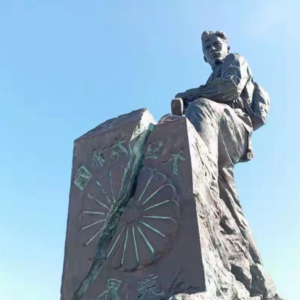
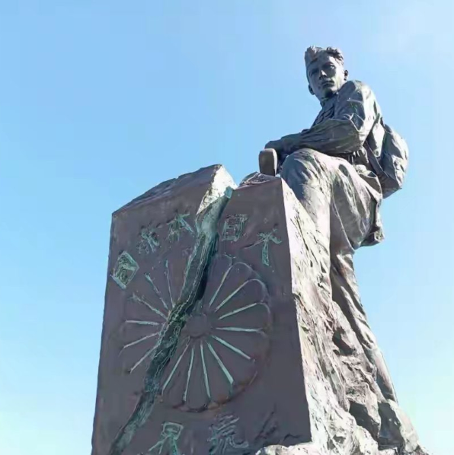
On 4 September, the day after the holiday of victory over Japan (Victory Day over Militaristic Japan and the End of World War II), a monument was unveiled in Khabarovsk depicting a Soviet soldier destroying a stone with a coat of arms featuring a chrysanthemum. Japanese authorities wanted it removed from the monument because it is a symbol of the imperial family. The Russian side, however, argued that this emblem is associated with Japanese militarism of the World War II period. In response to such a reaction, the Japanese Ministry of Foreign Affairs called Russia’s action “extremely regrettable” and decided to continue pressure on Moscow.
On 2 October Japan joined Western sanctions on the Russian Shadow Fleet and froze the assets of 33 entities and nine individuals linked to the Russian Federation. Additionally, on 6 October exports to Russia were restricted. The new restrictions covered 102 industrial goods, 9 substances related to chemical and biological weapons, as well as certain software for machines.
On 12 October Russian authorities on Sakhalin detained a Japanese journalist on espionage charges. The Hokkaido Shimbun correspondent was transported to Moscow, where he will be temporarily held until 12 December, and he faces up to 20 years in prison. Information about the detention was released on 13 October by the Federal Security Service, and the following day the Japanese Ministry of Foreign Affairs summoned the Russian ambassador to lodge a protest against the unilateral statement made without prior notification of the authorities in Tokyo, as well as against the detention of a Japanese citizen itself.
On 30 October, during the G20 meeting in Atlanta, Japanese Foreign Minister Toshimitsu Motegi met with his Russian counterpart Sergey Lavrov. The Japanese side raised the issue of recent tensions in relations between the two countries, pressed Russian representatives to release the detained journalist, and called on Russia to take actions aimed at achieving peace in Ukraine. According to the Russian side, for dialogue with Japan to resume, Tokyo must abandon its unfriendly policy.
On 5 November the Russian president signed a decree under which Russian assets of the company Japan Tobacco International were seized; the company owns brands such as Camel and Winston. This resulted in the company losing control over its local operations, which in Russia account for about 10% of its revenues and about 25% of its operating profit. Four entities belonging to Japan Tobacco International will come under the management of the Russian company Industrial Assets. The decree did not state the reason for the takeover, but in the past the Kremlin has linked similar actions to the behaviour of countries it designates as “hostile.” The Japanese authorities – which hold about 37% of the company’s shares – protested against this action and called for it to be reversed.
The tensions presented may be caused by Russia’s desire to improve relations with China, which has numerous disputes with Japan. Moreover, Russia’s actions are also aimed at changing Japan’s approach to Moscow. The authorities in the Kremlin want in this way to pressure Japan to abandon Western sanctions. For the authorities in Tokyo this situation is unfavourable due to the country’s dependence on exports and the enormous rise in energy prices. In Japan they have risen by 40%, and imports of Russian LNG amount to 9%. The local government, however, considers that it plays a very important role for the country’s energy security. Additionally, since the 1990s Japan has tried to bind itself economically with Russia, counting on the fact that through economic cooperation the government in Moscow would be more favourable to resolving the territorial disputes. This policy ultimately did not bring the desired effect, but energy dependence means that the authorities in Japan are reluctant to change their stance toward Russia, which results in a lack of a decisive response to Russian actions. The American factor is also important here – since the beginning of the crisis in relations between Japan and China, the Japanese side has counted on U.S. support, which, however, turned out to be limited. With the recent improvement in American-Russian relations, Tokyo may similarly expect limited support from its ally.
A survey conducted by the Japanese Cabinet Office at the end of 2025 showed that 93.2% of Japanese respondents do not feel sympathy toward Russia, and a survey from March 2026 showed that 87% of Japanese perceive Russia as a threat to national security. In October 2026 the Japan Press Research Institute published the results of surveys conducted in July and August of this year. In the survey about 32% of respondents indicated China as the greatest threat to world peace, about 26% indicated the USA, and about 18% indicated Russia. At the end of August Nikkei conducted a poll asking how the Japanese authorities should react to the Russian president’s visit to the disputed island. Of those surveyed, 53% favoured dialogue, and 39% supported a more decisive stance. The results of these surveys show that the majority of Japanese perceive Russia as one of the main threats to their country. Despite this, however, they prefer that the government conduct dialogue with this state rather than adopt a tougher position.
BIBLIOGRAPHY:
Original in Polish, translated by Grok AI
Rodkiewicz, W., Following Beijing’s Lead, the Kremlin Hardens Its Stance towards Tokyo. „OSW Centre for Eastern Studies”, 19.08.2026. https://www.osw.waw.pl/en/publikacje/analyses/2026-08-19/following-beijings-lead-kremlin-hardens-its-stance-towards-tokyo.
Pollmann, M., Putin’s Visit to Disputed Island Exacerbates Japan-Russia Tensions. „The Diplomat„, 20.08.2026. https://thediplomat.com/2026/08/putins-visit-to-disputed-island-exacerbates-japan-russia-tensions/.
Smith, S. A., Why Japan, South Korea, and China Are So Riled Up Over a Few Tiny Islands. „The Atlantic”, 16.08.2012. https://www.theatlantic.com/international/archive/2012/08/why-japan-south-korea-and-china-are-so-riled-up-over-a-few-tiny-islands/261224/
Taku, T., Fujiwara S., Hasegawa T., i Itabashi K., Japan: Update on Sanction Measures against Russia. „Global Sanctions and Export Controls Blog”, 27.10.2026. https://sanctionsnews.bakermckenzie.com/japan-update-on-sanction-measures-against-russia/.
Kosuke, Takahashi., Russia’s Arrest of a Japanese Journalist Deepens the Freeze in Japan-Russia Relations. „The Diplomat”14.10.2026, https://thediplomat.com/2026/10/russias-arrest-of-a-japanese-journalist-deepens-the-freeze-in-japan-russia-relations/.
Brunnstrom, D., Japan Demands Release of National in Meeting with Russia’s Lavrov. „Reuters”, 30.10,2026, https://www.reuters.com/world/asia-pacific/japan-demands-release-national-meeting-with-russias-lavrov-2026-10-30/.
Yamazaki, M., Stolyarov, G., Prentice, A., & Geddie, J., Putin seizes control of Japan Tobacco’s Russian assets. „Reuters”, 5.11.2026, https://www.reuters.com/world/asia-pacific/putin-places-japan-tobaccos-russian-assets-under-temporary-administration-2026-11-05/
Kortunov, A., A pause in the Russia-Japan dialogue is likely to continue „Global Times”, 2.08.2026, https://www.globaltimes.cn/page/202608/1367355.shtml
Wu, B., Japan Faces Hard Choices in Weaning off Russian Energy „The Diplomat”, 15.09.2026, https://thediplomat.com/2026/09/japan-faces-hard-choices-in-weaning-off-russian-energy/
26% in Japan see U.S. as biggest threat to world peace: Survey. „The Japan Times”, 11.10.2026, https://www.japantimes.co.jp/news/2026/10/11/japan/japan-survey-us-biggest-threat-to-peace/
Majority of Japanese favor dialogue with Russia, not harsher sanctions, poll shows. „TASS”, 15.08.2026, https://tass.com/world/2187973
About the author
KKKamil KucharskiEditorial care
 Adrian MatuszykVice President · Co-Editor-in-Chief
How to cite
Kamil Kucharski (2026). Japanese-Russian Relations in Recent Months. TC/2026/29. Terra Cracovianum, Kraków.